Cash rent for irrigated cropland: Vermont
The average cash rent farmers paid per acre for irrigated cropland, from USDA's yearly cash rents survey.
The latest figures and how they have changed
 Chart by TallyTill · tallytill.com
What the numbers say
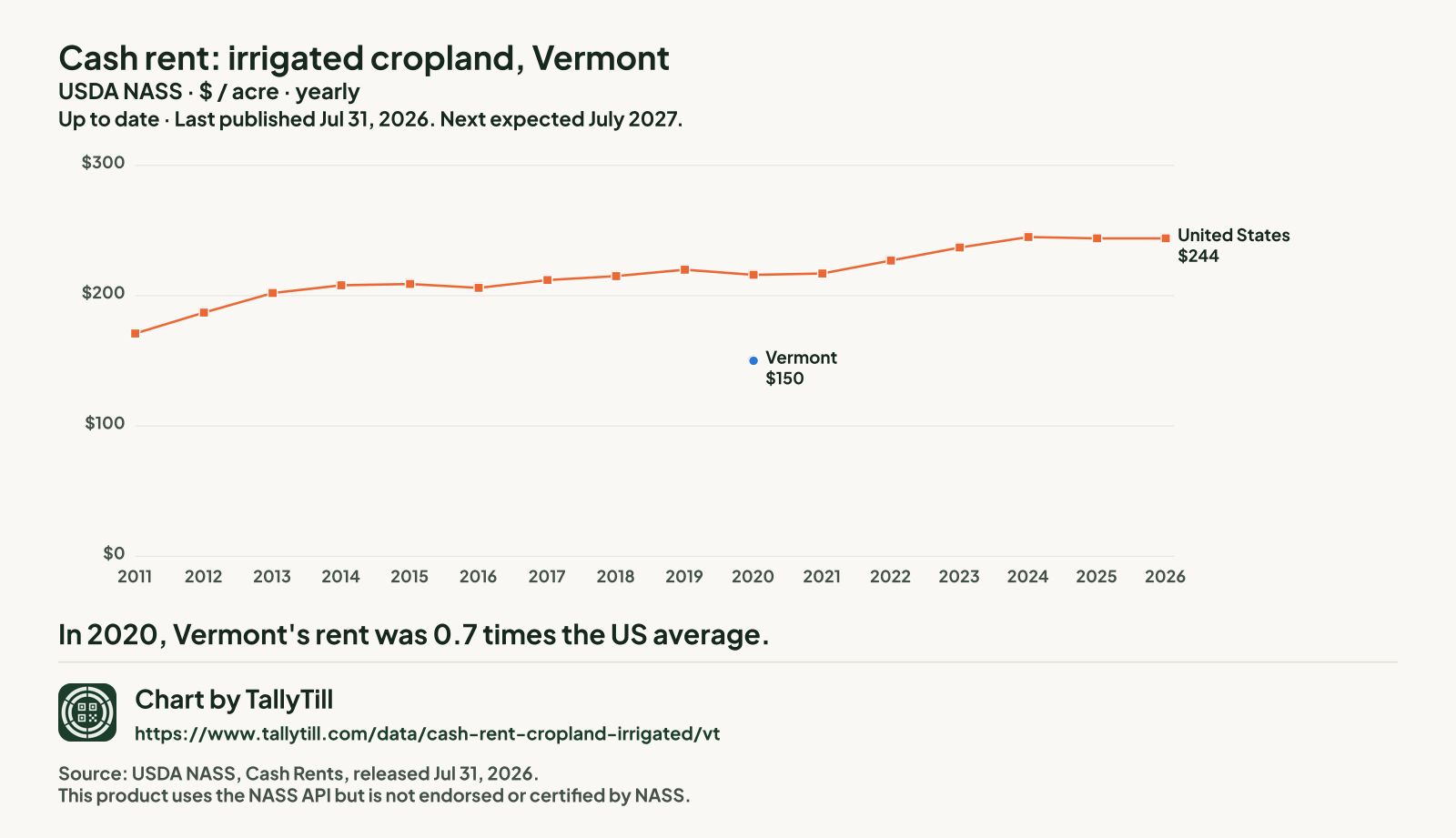
- In 2020, Vermont's rent was 0.7 times the US average.
- Gaps are years with no Vermont figure: too few farms reported in 2012, 2013 and 2014 for NASS to publish a figure. Nothing is filled in.
Every figure behind this chart
| Year | Vermont | United States |
|---|---|---|
| 2026 | No figure | $244 |
| 2025 | No figure | $244 |
| 2024 | No figure | $245 |
| 2023 | No figure | $237 |
| 2022 | No figure | $227 |
| 2021 | No figure | $217 |
| 2020 | $150 | $216 |
| 2019 | No figure | $220 |
| 2018 | No figure | $215 |
| 2017 | No figure | $212 |
| 2016 | No figure | $206 |
| 2015 | No figure | $209 |
| 2014 | Too few reports to publish | $208 |
| 2013 | Too few reports to publish | $202 |
| 2012 | Too few reports to publish | $187 |
| 2011 | No figure | $171 |
Every Vermont county, 2020
Darker shading means a higher figure. Values run from $99.50 an acre in Orange County to $224 an acre in Chittenden County.
- Under $109 (1 county)
- $109 to under $224 (1 county)
- $224 and over (1 county)
- Not published separately (11 counties, $165 an acre combined)
NASS combined Addison County, Bennington County, Caledonia County, Essex County, Franklin County, Grand Isle County, Lamoille County, Orleans County, Washington County, Windham County and Windsor County into "other counties", so they have no figure of their own.
| Rank | County | Figure (dollars an acre) | Precision (CV) |
|---|---|---|---|
| 1 | Chittenden County | $224 | Not given |
| 2 | Rutland County | $109 | Not given |
| 3 | Orange County | $99.50 | Not given |
What this measures
NASS asks farm operators what they pay in cash rent per acre, separately for irrigated cropland, non-irrigated cropland and pasture. State figures come out at the end of July; county figures follow in August. When too few farms in a county answer, NASS combines that county with others and publishes one "other counties" figure, so some counties have no figure of their own.