Cash rent for non-irrigated cropland: Litchfield County, Connecticut
The average cash rent farmers paid per acre for non-irrigated cropland, from USDA's yearly cash rents survey.
The latest figures and how they have changed
 Chart by TallyTill · tallytill.com
What the numbers say
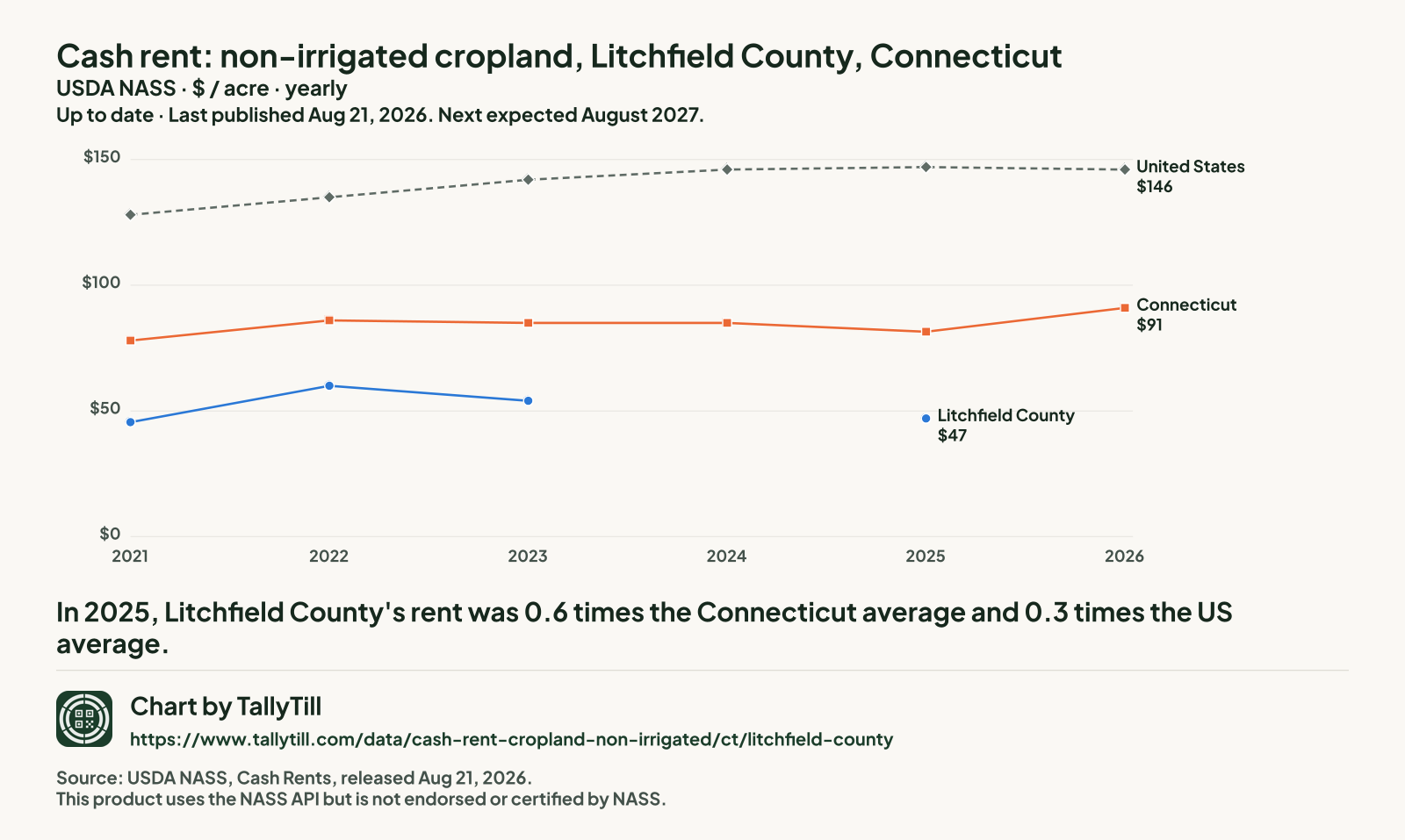
- In 2025, Litchfield County's rent was 0.6 times the Connecticut average and 0.3 times the US average.
- It is the lowest of the 4 Connecticut counties NASS published for 2025.
- From 2021 to 2025 it rose 3.3%, from $45.50 to $47 an acre.
- Gaps are years with no separate Litchfield figure: in 2024 and 2026 NASS combined Litchfield into "other counties". Nothing is filled in.
Every figure behind this chart
| Year | Litchfield County | Connecticut | United States |
|---|---|---|---|
| 2026 | Combined into "other counties" | $91 | $146 |
| 2025 | $47 | $81.50 | $147 |
| 2024 | Combined into "other counties" | $85 | $146 |
| 2023 | $54 | $85 | $142 |
| 2022 | $60 | $86 | $135 |
| 2021 | $45.50 | $78 | $128 |
Every Connecticut county, 2026
Darker shading means a higher figure. Values run from $56 an acre in Windham County to $152 an acre in Hartford County.
- Under $40 (0 counties)
- $40 to under $80 (2 counties)
- $80 to under $120 (3 counties)
- $120 to under $160 (1 county)
- $160 and over (0 counties)
- Not published separately (2 counties, $70.50 an acre combined)
NASS combined Fairfield County and Litchfield County into "other counties", so they have no figure of their own.
Litchfield: not published separately.
| Rank | County | Figure (dollars an acre) | Precision (CV) |
|---|---|---|---|
| 1 | Hartford County | $152 | 7.3% |
| 2 | Tolland County | $90 | 6.2% |
| 3 | New London County | $86 | 8.2% |
| 4 | New Haven County | $80 | 5.4% |
| 5 | Middlesex County | $67.50 | 11.1% |
| 6 | Windham County | $56 | 8.6% |
What this measures
NASS asks farm operators what they pay in cash rent per acre, separately for irrigated cropland, non-irrigated cropland and pasture. State figures come out at the end of July; county figures follow in August. When too few farms in a county answer, NASS combines that county with others and publishes one "other counties" figure, so some counties have no figure of their own.