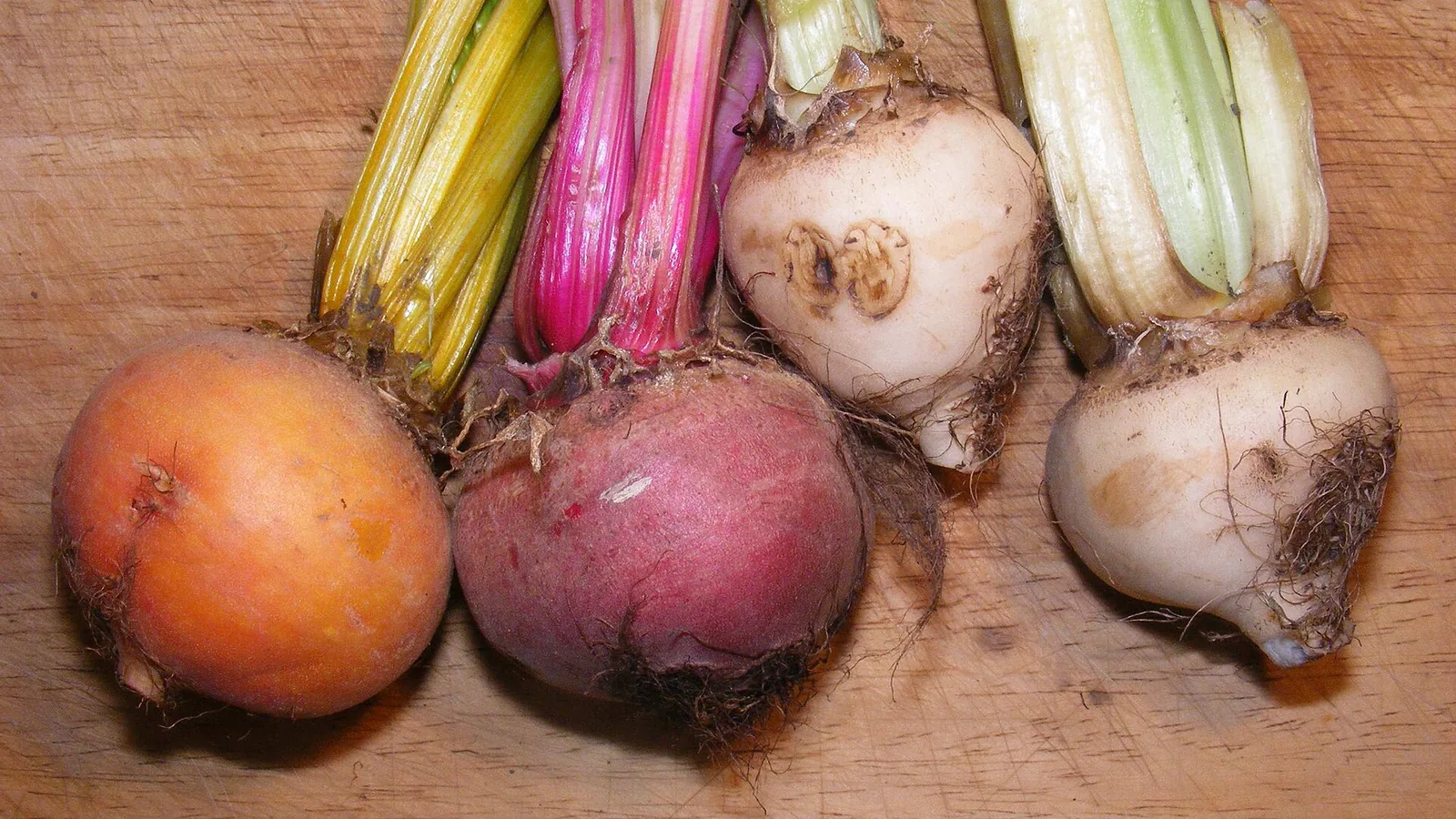
Yellow, red and white beets with their coloured stems
How to grow

Beets

Takes a light frost. Sow outdoors 2 to 3 weeks before your last frost; sow in fall 7 to 10 weeks before your first fall frost. First harvest 50 to 80 days from sowing.

Photo: “Uncommon beetroot colours” by Beet man, CC BY-SA 3.0, via Wikimedia Commons (cropped). The cropped version is shared under the same licence.

  • Full sun6–8 hours or more
  • 2–4 in apartRows 12–18 in
  • 50–80 daysFrom sowing
  • Soil 40 °F +pH 6.0–6.5
  • Half-hardyTakes a light frost

Your dates

Put in your ZIP code to see when to start, plant and harvest beets where you live, from your own frost dates.

Look up the frost dates for this ZIP code
Open my planting calendarOpen the planting calendar Add this crop to the calendar saved on this device

From seed to harvest

  1. SowSeed goes inWeek 0
  2. SproutFirst shoots showWeek 1–2
  3. True leavesFirst real leavesWeek 2–3
  4. ThinThin to final spacingWeek 3–4
  5. Root swellsRoots thickenWeek 5–6
  6. HarvestReady to pickWeek 7–11

How to plant and grow

  1. Prepare the soil

    Choose a sunny spot with loose, well-drained soil. Work in compost and remove rocks.

  2. Soak and sow

    Soak seed in warm water for a day to speed sprouting. Sow 1/2 inch deep, two to three weeks before last frost.

  3. Thin the clusters

    Each beet seed is a cluster that sends up several sprouts. Thin to 3 inches apart and eat the thinnings as greens.

  4. Water steadily

    Keep soil evenly moist, especially in the first six weeks. Dry spells make tough, woody roots.

  5. Sow in batches

    Sow every two to three weeks for a steady supply. Make the last sowing about six weeks before fall frost.

  6. Harvest

    Pull roots when they are 1 to 3 inches across. Greens can be picked when 4 to 6 inches tall.

Common problems

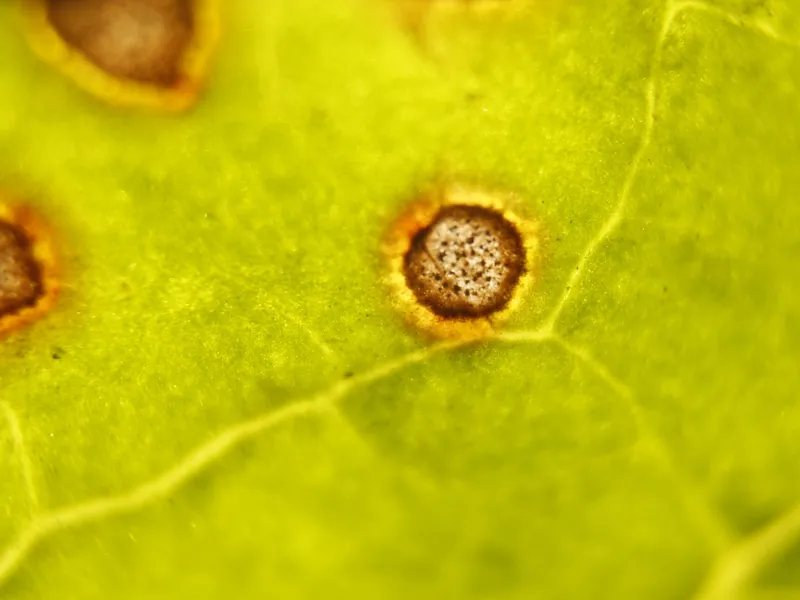
A beet leaf with round, tan Cercospora leaf spots ringed in red
Photo: “Cercospora beticola spot on sugar beet leaf 2” by Ayman Esh, CC BY-SA 4.0, via Wikimedia Commons (cropped). The cropped version is shared under the same licence.

Cercospora leaf spotDiseaseSprays are rarely needed

What you'll see: Small round tan spots with purple-red edges on beet and chard leaves. The centers may fall out, leaving holes.

Prevent

  • Keep beets, chard and spinach out of a bed for 3 years.
  • Remove all leaves and debris at the end of the season.
  • Water at the base and space plants for air flow.

Organic options

  • Pick off spotted leaves; new leaves grow from the center.
  • Pull up and hot-compost badly infected plants.

Conventional options

  • Same as organic. Leaf picking, clean-up and rotation control it in a home garden.
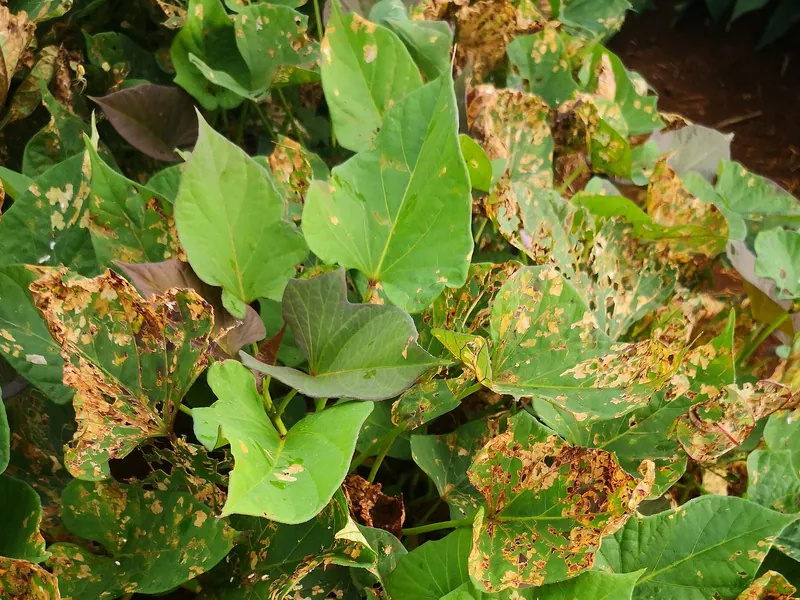
Sweet potato leaves blotched brown by leaf miner tunnels
Photo: “Sweet potato plant with leaf miner damage” by Phytorealism, CC BY-SA 4.0, via Wikimedia Commons (cropped). The cropped version is shared under the same licence.

Leaf minersPestNo spray helps

What you'll see: Pale, winding trails or blotches inside leaves, where tiny larvae feed between the leaf surfaces.

Prevent

  • Cover beets, chard and spinach with row cover before the flies appear in spring, but not over soil that had leaf miners last year.
  • Pull weeds such as lambsquarters and pigweed.
  • Crush the small white eggs on leaf undersides.

Organic options

  • Pick off and bin mined leaves while damage is light.

Conventional options

  • Sprays do little, since the larvae are shielded inside the leaf. Mines in beet leaves do not harm the roots.
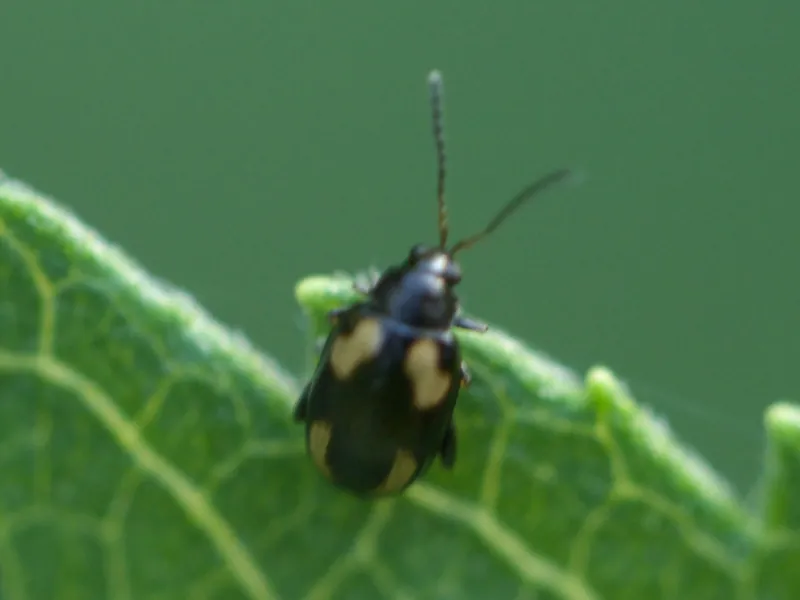
A striped flea beetle on the edge of a leaf
Photo: “Phyllotreta striolata P1210443a” by xpda, CC BY-SA 4.0, via Wikimedia Commons (cropped). The cropped version is shared under the same licence.

Flea beetlesPest

What you'll see: Many tiny round holes and pits in leaves, as if hit by buckshot. Tiny dark beetles jump when disturbed.

Prevent

  • Cover seedlings with row cover and seal the edges.
  • Plant a little later, so warm weather carries plants through the damage.
  • Sow radish ahead of the main crop as a trap crop.
  • Clear weeds and old crop debris.

Organic options

  • Spinosad, or OMRI Listed pyrethrins (without piperonyl butoxide).

Conventional options

  • Carbaryl, malathion or permethrin, if the crop is on the label. Older plants seldom need treatment.

Bee caution: Don't spray open flowers. Spray in the late evening, when bees aren't flying.

Damping-offDiseaseSprays are rarely needed

What you'll see: Seedlings fail to come up, or fall over and die with a thin, water-soaked stem at the soil line.

Prevent

  • Use fresh seed-starting mix and clean trays, never garden soil.
  • Do not overwater; let the surface dry a little between waterings.
  • Keep the mix warm and give seedlings good light and air flow.
  • Sow outdoors only once the soil has warmed.

Organic options

  • Remove dead seedlings and the mix around them, and start again with fresh mix.

Conventional options

  • Fungicides are a last resort, and young seedlings are easily hurt by them. Clean mix and careful watering are the fix.
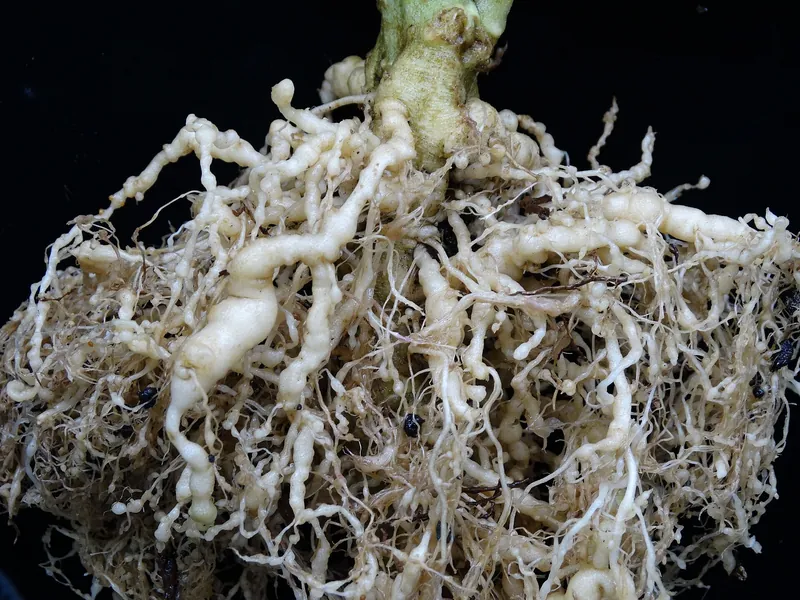
Tomato roots swollen with root-knot nematode galls
Photo: Plant pests and diseases, CC0, via Wikimedia Commons.

Root-knot nematodesPestNo spray helps

What you'll see: Plants are stunted and wilt in the heat. Roots have knobby swellings, and carrots may fork.

Prevent

  • Grow resistant varieties; look for N on the label.
  • Rotate susceptible crops, or move the garden.
  • Solarize the bed: clear plastic over moist, tilled soil for 6 weeks or more in summer.
  • Grow French marigolds as a cover in infested beds.

Organic options

  • Pull and remove roots after harvest.
  • Keep an infested bed bare and tilled through the summer.

Conventional options

  • None for home gardens; nematicides are for commercial applicators.

Read and follow the product label: it is the law. It sets the rate, the crops it is for, and the days between spraying and picking. Products registered vary by state; for organic growing, look for products allowed under the USDA National Organic Program (OMRI Listed). We name active ingredients, not brands or rates.

ShareShare a link to this growing guide.

Share this growing guide

The link opens this growing guide, so anyone can read it and look up their own planting dates.

FacebookShare this link on Facebook.XShare this link on X.LinkedInShare this link on LinkedIn.RedditShare this link on Reddit.PinterestShare this link on Pinterest.EmailEmail this link.Open your device's share menu. Copy the link to your clipboard.

Growing more than you can eat? Sell it at a farm stand. TallyTill takes cards and keeps count of what sells, and the Stand plan is free.
Get started with TallyTill for free

Sources

Planting dates and growing facts checked against these university extension and USDA pages:

Growth-stage drawings: TallyTill.

Reconnecting…
One moment — we're restoring your session.