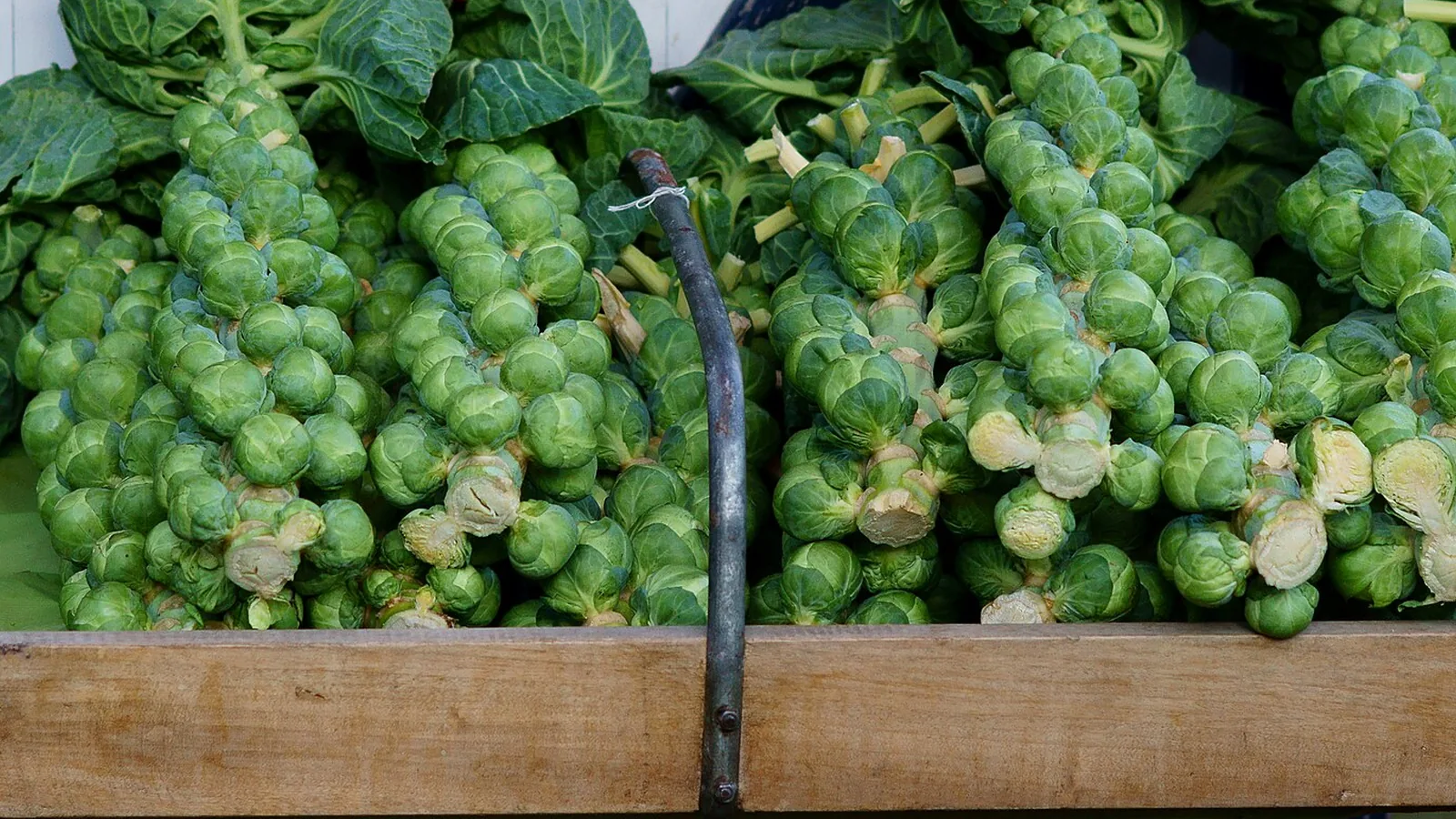
Stalks of Brussels sprouts with the sprouts packed along them
How to grow

Brussels sprouts

Takes a hard frost. Start indoors 4 to 6 weeks before your last frost; plant out from 1 week before to 2 weeks after your last frost; sow outdoors 2 to 4 weeks before your last frost; plant in fall 12 to 14 weeks before your first fall frost. First harvest 85 to 110 days from planting.

Photo: “Brussels Sprouts at Fanny's Farm Shop - geograph.org.uk - 2739609” by Peter Trimming, CC BY-SA 2.0, via Wikimedia Commons (cropped). The cropped version is shared under the same licence.

  • Full sun6–8 hours or more
  • 18–24 in apartRows 24–30 in
  • 85–110 daysFrom planting out
  • pH 6.0–7.2Soil pH
  • 1–2 in a weekEven watering
  • HardyTakes a hard frost

Your dates

Put in your ZIP code to see when to start, plant and harvest brussels sprouts where you live, from your own frost dates.

Look up the frost dates for this ZIP code
Open my planting calendarOpen the planting calendar Add this crop to the calendar saved on this device

From seed to harvest

  1. SowSeed goes inWeek 0
  2. SproutFirst shoots showWeek 1
  3. Plant outSet out transplantsWeek 4–5
  4. Leaf growthLeaves fill outWeek 6–9
  5. Head formsHeads start to formWeek 12–15
  6. HarvestReady to pickWeek 16–20

How to plant and grow

  1. Start indoors

    Sow seed indoors and grow plants for 4 to 5 weeks. Harden them off for several days before planting out.

  2. Plant out

    Set plants 18 to 24 inches apart in rows 2 to 2.5 feet apart, in a spot with at least 6 hours of direct sun.

  3. Water weekly

    Give 1 to 2 inches of water a week. Uneven moisture while sprouts form can make them loose or bitter.

  4. Watch for pests

    Check for cabbageworms, flea beetles and aphids. Rotate cabbage-family crops to cut down on disease.

  5. Let frost help

    This is a long-season crop that matures in fall. A few light frosts improve the flavor of the sprouts.

  6. Pick from the bottom

    Snap off firm sprouts 1 to 1.5 inches across, starting at the bottom of the stalk. Finish before a severe freeze.

Common problems

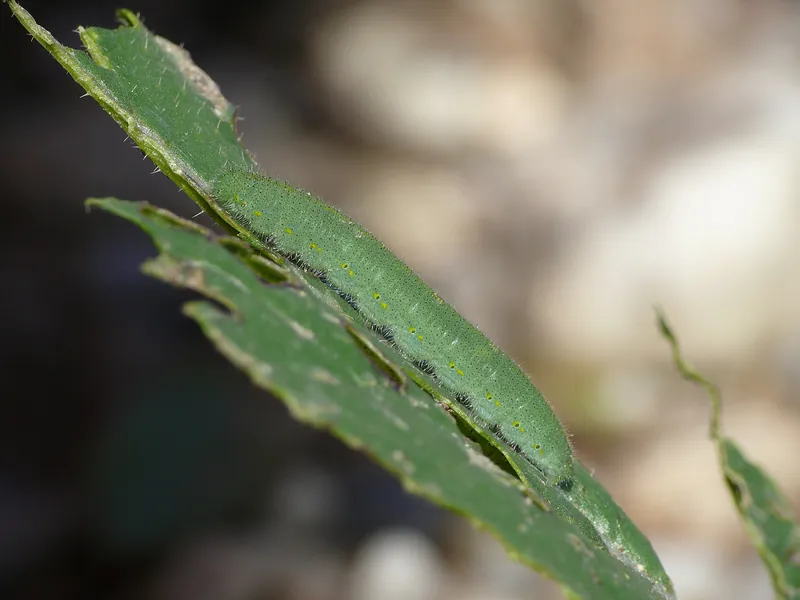
A velvety green imported cabbageworm caterpillar on a leaf
Photo: “Pieris rapae - larva 01 (HS)” by Harald Süpfle, CC BY-SA 3.0, via Wikimedia Commons (cropped). The cropped version is shared under the same licence.

Imported cabbagewormPest

What you'll see: Velvety green caterpillars chew holes in leaves and bore into heads, leaving dark green droppings. White butterflies flutter over the bed.

Prevent

  • Cover plants with row cover from planting.
  • Check leaves each week and pick off caterpillars.

Organic options

  • Hand-pick caterpillars.
  • Bt (Bacillus thuringiensis kurstaki) or spinosad on young caterpillars. Look for OMRI Listed products.

Conventional options

  • Same as organic: Bt and spinosad are the usual choices.

Bee caution: Don't spray open flowers. Spray in the late evening, when bees aren't flying.

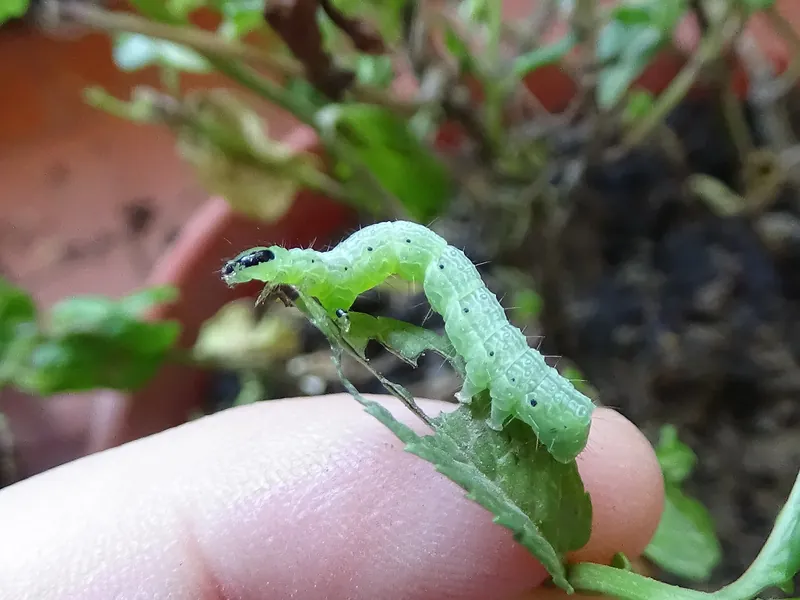
A pale green cabbage looper caterpillar on a leaf
Photo: “Cabbage looper caterpillar” by Lua Eva Blue, CC BY 3.0, via Wikimedia Commons (cropped).

Cabbage looperPest

What you'll see: Pale green caterpillars that arch their backs as they crawl chew ragged holes in leaves.

Prevent

  • Cover young plants with row cover.
  • Check leaf undersides each week and pick off caterpillars.

Organic options

  • Hand-pick caterpillars.
  • Bt (Bacillus thuringiensis kurstaki) or spinosad on young caterpillars. Look for OMRI Listed products.

Conventional options

  • Same as organic: Bt and spinosad are the usual choices.

Bee caution: Don't spray open flowers. Spray in the late evening, when bees aren't flying.

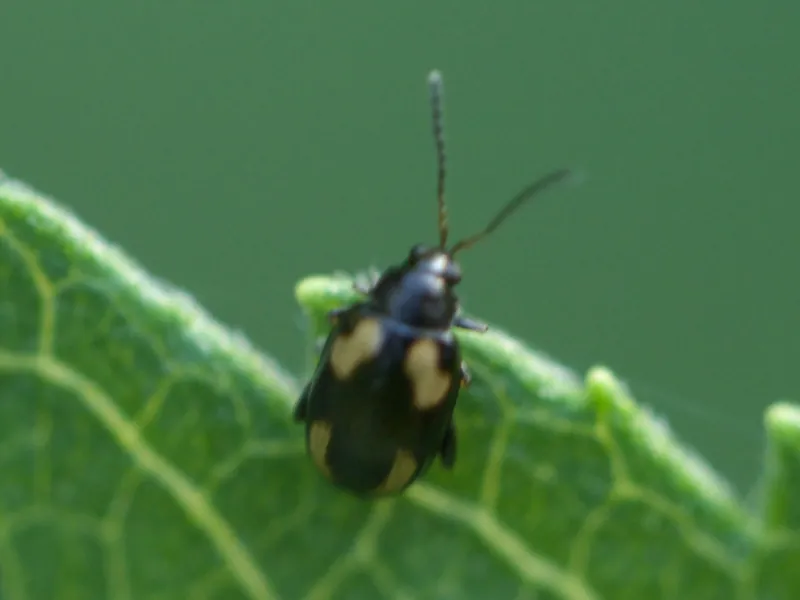
A striped flea beetle on the edge of a leaf
Photo: “Phyllotreta striolata P1210443a” by xpda, CC BY-SA 4.0, via Wikimedia Commons (cropped). The cropped version is shared under the same licence.

Flea beetlesPest

What you'll see: Many tiny round holes and pits in leaves, as if hit by buckshot. Tiny dark beetles jump when disturbed.

Prevent

  • Cover seedlings with row cover and seal the edges.
  • Plant a little later, so warm weather carries plants through the damage.
  • Sow radish ahead of the main crop as a trap crop.
  • Clear weeds and old crop debris.

Organic options

  • Spinosad, or OMRI Listed pyrethrins (without piperonyl butoxide).

Conventional options

  • Carbaryl, malathion or permethrin, if the crop is on the label. Older plants seldom need treatment.

Bee caution: Don't spray open flowers. Spray in the late evening, when bees aren't flying.

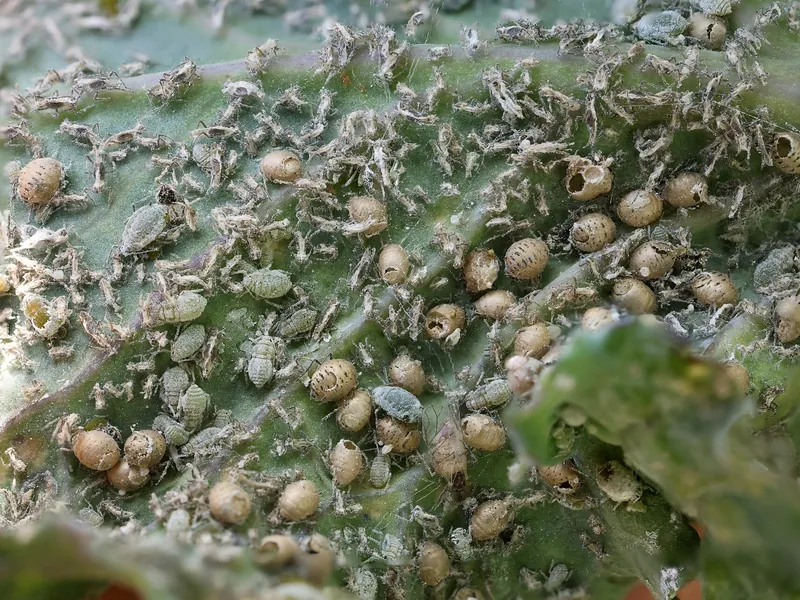
A dense colony of grey aphids on a kale leaf
Photo: “Aphids on Kale leaf” by Sanjay Acharya, CC BY-SA 4.0, via Wikimedia Commons (cropped). The cropped version is shared under the same licence.

AphidsPest

What you'll see: Clusters of small, soft-bodied green, black or gray insects on new shoots and under leaves. Leaves curl, and a sticky film may coat them.

Prevent

  • Check leaf undersides each week; a few aphids do little harm.
  • Pull nearby weeds, such as wild mustards, that feed aphids.
  • Grow flowers for lady beetles, lacewings and hover flies, and avoid broad sprays that kill them.

Organic options

  • Knock aphids off with a strong spray of water.
  • Insecticidal soap or horticultural oil on leaf undersides, repeated as the label allows.
  • Neem oil, or OMRI Listed pyrethrins (without piperonyl butoxide).

Conventional options

  • Malathion or permethrin, if the crop is on the label. These also kill the insects that eat aphids.

Bee caution: Don't spray open flowers. Spray in the late evening, when bees aren't flying.

Read and follow the product label: it is the law. It sets the rate, the crops it is for, and the days between spraying and picking. Products registered vary by state; for organic growing, look for products allowed under the USDA National Organic Program (OMRI Listed). We name active ingredients, not brands or rates.

ShareShare a link to this growing guide.

Share this growing guide

The link opens this growing guide, so anyone can read it and look up their own planting dates.

FacebookShare this link on Facebook.XShare this link on X.LinkedInShare this link on LinkedIn.RedditShare this link on Reddit.PinterestShare this link on Pinterest.EmailEmail this link.Open your device's share menu. Copy the link to your clipboard.

Growing more than you can eat? Sell it at a farm stand. TallyTill takes cards and keeps count of what sells, and the Stand plan is free.
Get started with TallyTill for free

Sources

Planting dates and growing facts checked against these university extension and USDA pages:

Growth-stage drawings: TallyTill.

Reconnecting…
One moment — we're restoring your session.