Takes a light frost. Start indoors 7 to 10 weeks before your last frost; plant out 1 to 3 weeks before your last frost; sow outdoors 2 to 4 weeks before your last frost; plant in fall 7 to 10 weeks before your first fall frost. First harvest 50 to 80 days from planting.
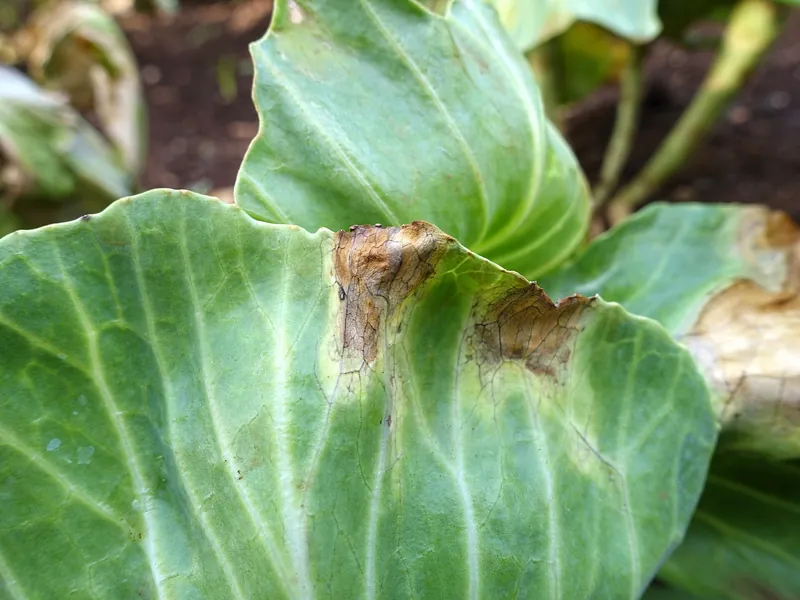
What you'll see: On cabbage-family crops, yellow V-shaped patches grow in from the leaf edges and the veins turn black. On sweet potatoes, firm, dark, sunken patches form on the roots, often found in storage.
Prevent
For cabbage-family crops, use certified or hot-water-treated seed and healthy transplants.
Keep cabbage-family crops out of a bed for 2 to 3 years, and control weeds.
For sweet potatoes, grow slips only from clean roots and cure the roots before storing.
Organic options
Pull and destroy infected plants and roots.
On cabbage-family crops, copper may slow spread while disease is light. Look for OMRI Listed products.
Conventional options
None. No spray cures black rot, and none helps stored sweet potatoes.
Bee caution: Don't spray open flowers. Spray in the late evening, when bees aren't flying.
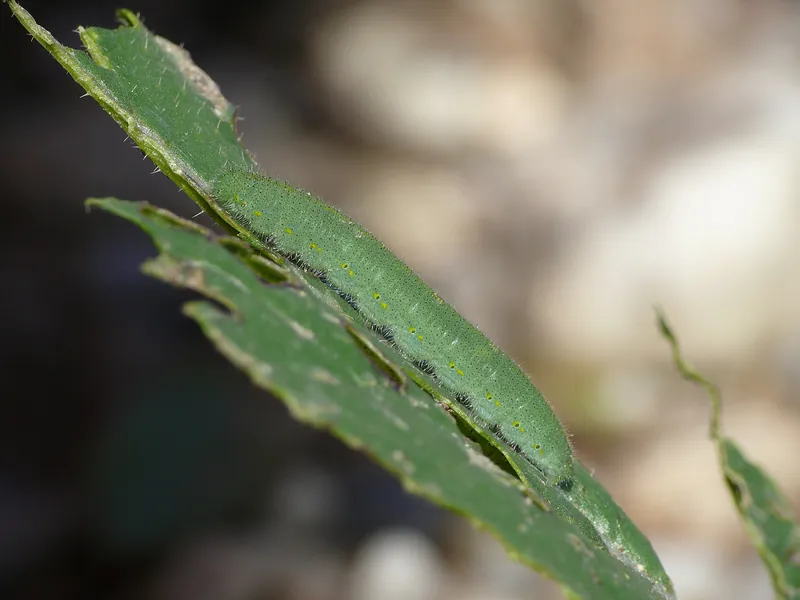
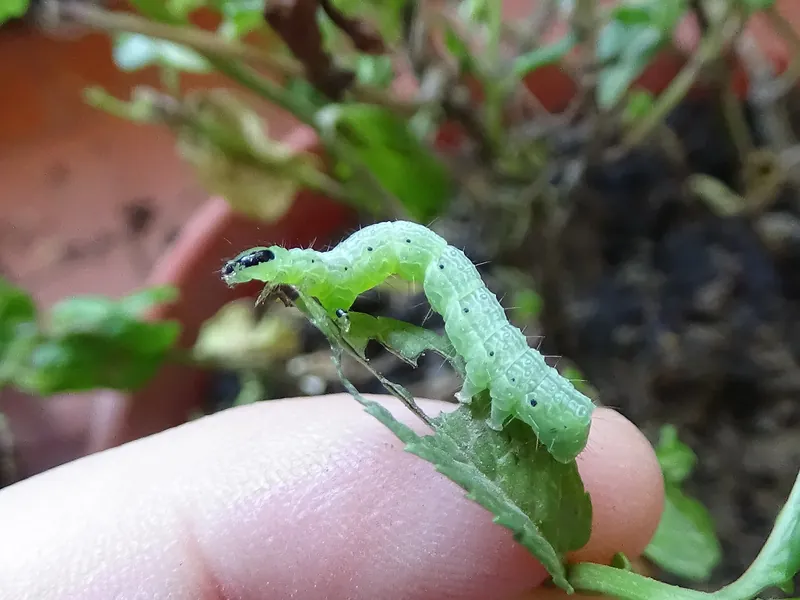
What you'll see: Velvety green caterpillars chew holes in leaves and bore into heads, leaving dark green droppings. White butterflies flutter over the bed.
Prevent
Cover plants with row cover from planting.
Check leaves each week and pick off caterpillars.
Organic options
Hand-pick caterpillars.
Bt (Bacillus thuringiensis kurstaki) or spinosad on young caterpillars. Look for OMRI Listed products.
Conventional options
Same as organic: Bt and spinosad are the usual choices.
Bee caution: Don't spray open flowers. Spray in the late evening, when bees aren't flying.
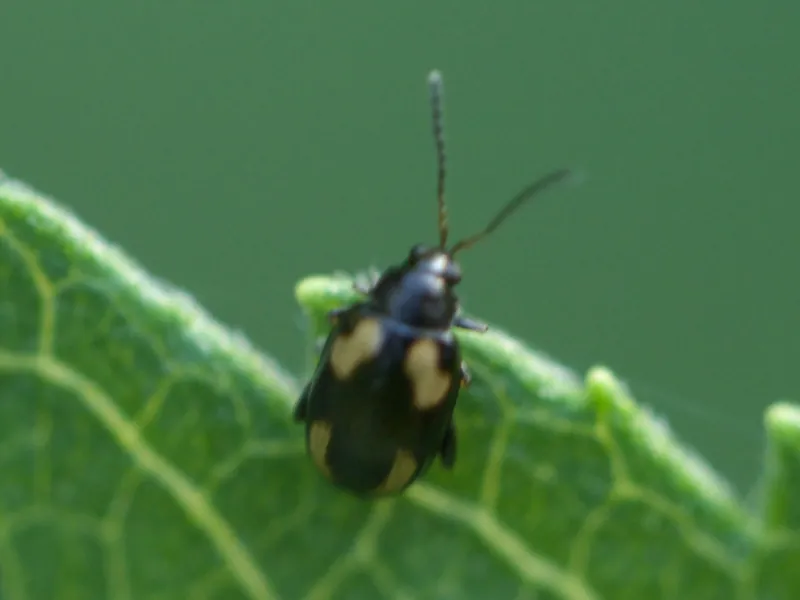
What you'll see: Many tiny round holes and pits in leaves, as if hit by buckshot. Tiny dark beetles jump when disturbed.
Prevent
Cover seedlings with row cover and seal the edges.
Plant a little later, so warm weather carries plants through the damage.
Sow radish ahead of the main crop as a trap crop.
Clear weeds and old crop debris.
Organic options
Spinosad, or OMRI Listed pyrethrins (without piperonyl butoxide).
Conventional options
Carbaryl, malathion or permethrin, if the crop is on the label. Older plants seldom need treatment.
Bee caution: Don't spray open flowers. Spray in the late evening, when bees aren't flying.
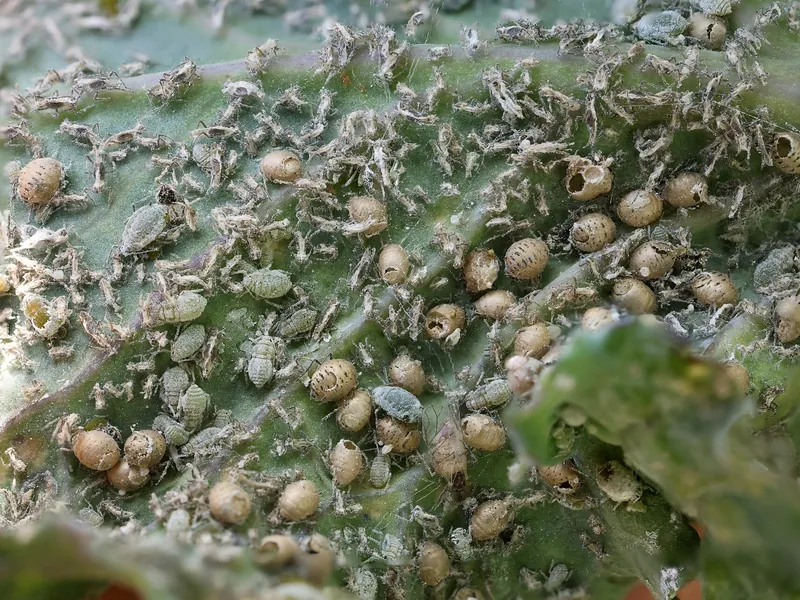
Photo: “Aphids on Kale leaf” by Sanjay Acharya, CC BY-SA 4.0, via Wikimedia Commons (cropped). The cropped version is shared under the same licence.
AphidsPest
What you'll see: Clusters of small, soft-bodied green, black or gray insects on new shoots and under leaves. Leaves curl, and a sticky film may coat them.
Prevent
Check leaf undersides each week; a few aphids do little harm.
Pull nearby weeds, such as wild mustards, that feed aphids.
Grow flowers for lady beetles, lacewings and hover flies, and avoid broad sprays that kill them.
Organic options
Knock aphids off with a strong spray of water.
Insecticidal soap or horticultural oil on leaf undersides, repeated as the label allows.
Neem oil, or OMRI Listed pyrethrins (without piperonyl butoxide).
Conventional options
Malathion or permethrin, if the crop is on the label. These also kill the insects that eat aphids.
Bee caution: Don't spray open flowers. Spray in the late evening, when bees aren't flying.
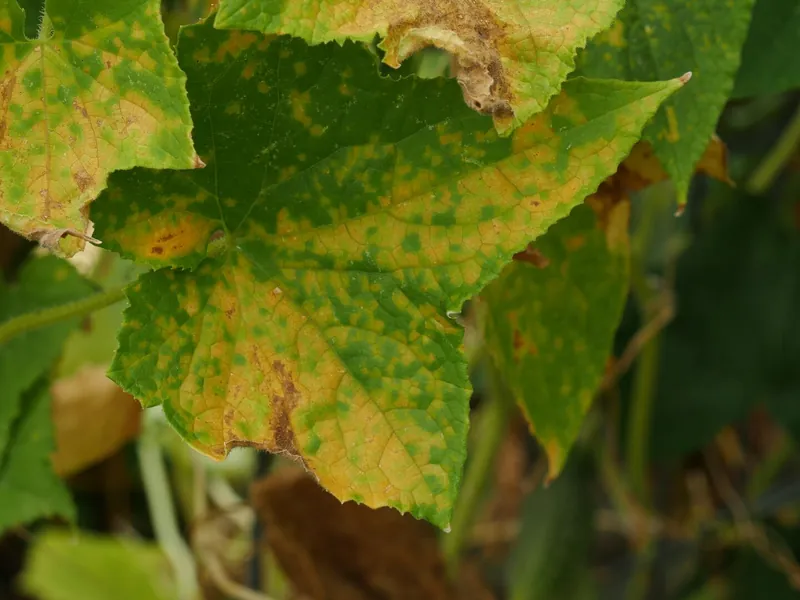
What you'll see: Yellow patches on top of leaves, often boxed in by the veins, with gray to purple fuzz underneath; on shallots, whitish-gray growth on older leaves. Leaves brown and die, worst in cool, wet weather.
Prevent
Grow resistant varieties; basil sold as downy mildew resistant holds up far better.
Space plants, trellis vines and water at the base so leaves dry fast.
Remove and destroy infected plants promptly.
Organic options
Copper protects cucumber and melon leaves best when used before the disease arrives. Look for OMRI Listed products.
Conventional options
Chlorothalonil or mancozeb on vine crops, if labeled. On basil, home-garden sprays work poorly; grow resistant varieties.
Bee caution: Don't spray open flowers. Spray in the late evening, when bees aren't flying.
Read and follow the product label: it is the law. It sets the rate, the crops it is for, and the days between spraying and picking. Products registered vary by state; for organic growing, look for products allowed under the USDA National Organic Program (OMRI Listed). We name active ingredients, not brands or rates.
The link opens this growing guide, so anyone can read it and look up their own planting dates.
FacebookShare this link on Facebook.XShare this link on X.LinkedInShare this link on LinkedIn.RedditShare this link on Reddit.PinterestShare this link on Pinterest.EmailEmail this link.Open your device's share menu.Copy the link to your clipboard.
Growing more than you can eat? Sell it at a farm stand. TallyTill takes cards and keeps count of what sells, and the Stand plan is free.
 Sow
 Sprout
 Plant out
 Leaf growth
 Head forms
 Harvest