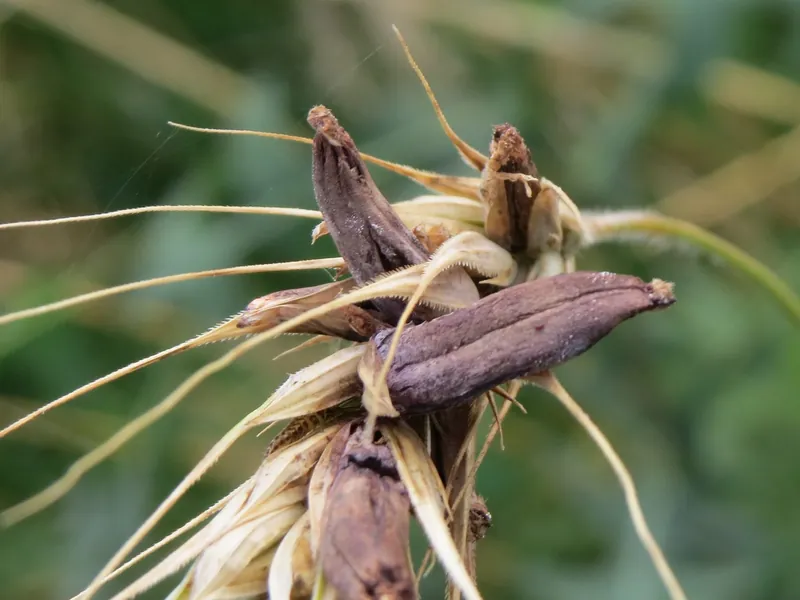
What you'll see: Hard, purple-black, horn-shaped bodies replace some grains in rye heads. They are poisonous to people and livestock.
Prevent
Kill a rye cover crop before it flowers, so no ergot forms.
Rotate with a broadleaf crop; ergot bodies seldom survive more than a year in soil.
Mow grassy edges before they flower.
Organic options
Never save seed or feed grain from heads with ergot bodies.
Conventional options
None worth using. Timing and rotation control it.
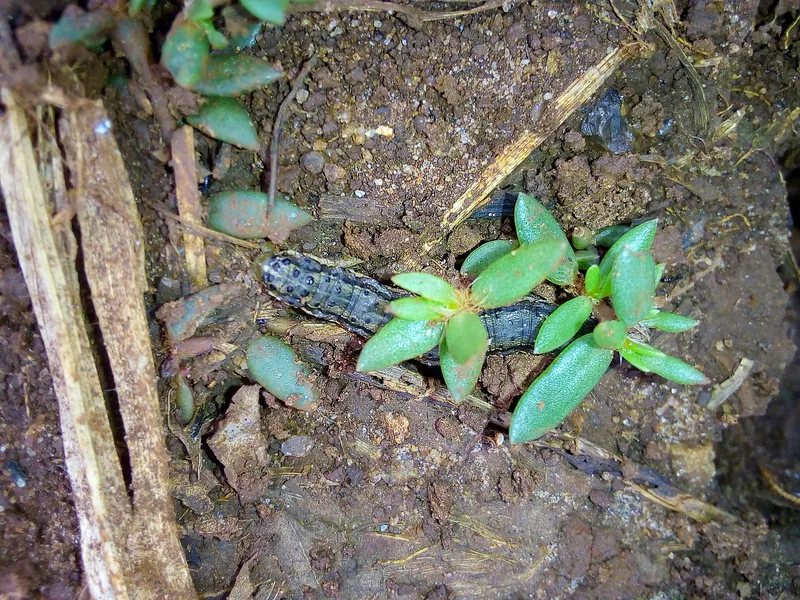
Photo: “Fall Armyworm” by Jaylython, CC BY-SA 4.0, via Wikimedia Commons (cropped). The cropped version is shared under the same licence.
ArmywormsPest
What you'll see: Striped green to brown caterpillars feed at night and strip rye leaves, sometimes cutting off heads. Once the rye is killed they move onto the next crop.
Prevent
Scout dense, lush rye and grassy edges at dusk or on cloudy days, when the caterpillars feed.
Kill rye early where you can; rye that is already dead draws fewer egg-laying moths.
Check for caterpillars before planting into killed rye.
Organic options
Bt (Bacillus thuringiensis kurstaki) works on small caterpillars. Look for OMRI Listed products.
Conventional options
Permethrin or zeta-cypermethrin, if the label lists small grains or the crop that follows. Cover crops are often not on labels.
Bee caution: Don't spray open flowers. Spray in the late evening, when bees aren't flying.
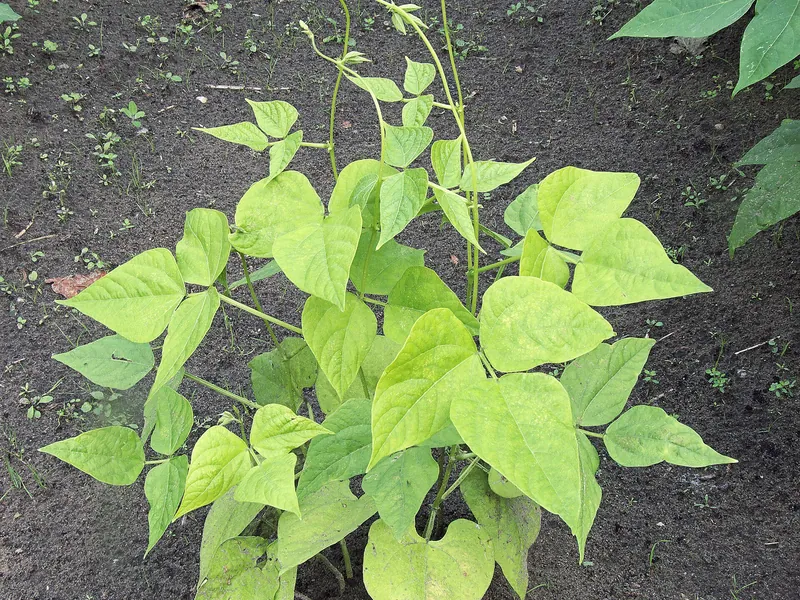
What you'll see: Crops planted into tall, mature rye stay pale and slow. Soil microbes use up the nitrogen while they break the rye down.
Prevent
Kill rye while it is young and leafy, under about 8 inches tall where you can.
Kill it 10 to 14 days or more before planting the next crop.
Organic options
When rye was killed late, add compost or another organic nitrogen source at planting.
Conventional options
A starter nitrogen fertilizer at planting. Nothing sprayed on the leaves fixes it.
Read and follow the product label: it is the law. It sets the rate, the crops it is for, and the days between spraying and picking. Products registered vary by state; for organic growing, look for products allowed under the USDA National Organic Program (OMRI Listed). We name active ingredients, not brands or rates.
The link opens this growing guide, so anyone can read it and look up their own planting dates.
FacebookShare this link on Facebook.XShare this link on X.LinkedInShare this link on LinkedIn.RedditShare this link on Reddit.PinterestShare this link on Pinterest.EmailEmail this link.Open your device's share menu.Copy the link to your clipboard.
Growing more than you can eat? Sell it at a farm stand. TallyTill takes cards and keeps count of what sells, and the Stand plan is free.
 Sow
 Sprout
 Ground cover
 Overwinter
 Flowers
 Terminate