Takes a light frost. Sow outdoors up to 2 weeks before your last frost; sow in fall 8 to 10 weeks before your first fall frost. First harvest 42 to 56 days from sowing.
Put in your ZIP code to see when to start, plant and harvest dill where you live, from your own frost dates.
Open my planting calendarOpen the planting calendarAdd this crop to the calendar saved on this device
From seed to harvest
SowSeed goes inWeek 0
SproutFirst shoots showWeek 1–3
True leavesFirst real leavesWeek 2–4
Thin or plant outGive each plant roomWeek 3–5
Leaf growthLeaves fill outWeek 4–6
HarvestReady to pickWeek 6–8
How to plant and grow
Sow where it grows
Dill has a taproot and transplants poorly. Sow seed directly in a sunny bed around the last spring frost.
Thin seedlings
Seedlings come up in one to three weeks. Thin to about 9 inches apart in rows about a foot apart.
Water lightly
Once plants are up, water once or twice a week. Dill handles drier soil and gets mildew if overwatered.
Sow in batches
Plants fade soon after flowering. Sow again every two to four weeks for steady leaves.
Harvest leaves
Start cutting leaves about six to eight weeks after sowing. Leaves are best as the flowers open.
Harvest seed
Seeds ripen two to three weeks after bloom. Cut heads when seeds turn flat and brown and dry them in a paper bag.
Share with wildlife
Dill draws helpful insects. Swallowtail caterpillars feed on it; leave a few plants for them if you can.
Common problems
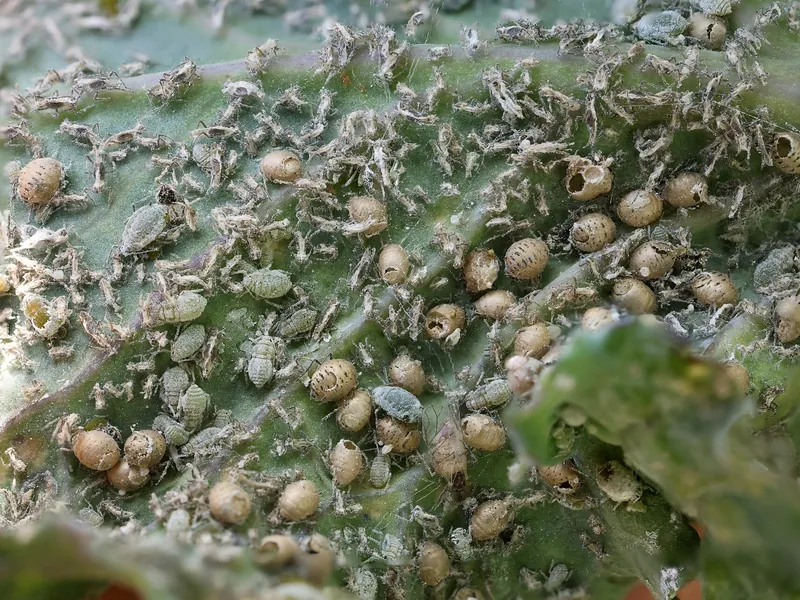
Photo: “Aphids on Kale leaf” by Sanjay Acharya, CC BY-SA 4.0, via Wikimedia Commons (cropped). The cropped version is shared under the same licence.
AphidsPest
What you'll see: Clusters of small, soft-bodied green, black or gray insects on new shoots and under leaves. Leaves curl, and a sticky film may coat them.
Prevent
Check leaf undersides each week; a few aphids do little harm.
Pull nearby weeds, such as wild mustards, that feed aphids.
Grow flowers for lady beetles, lacewings and hover flies, and avoid broad sprays that kill them.
Organic options
Knock aphids off with a strong spray of water.
Insecticidal soap or horticultural oil on leaf undersides, repeated as the label allows.
Neem oil, or OMRI Listed pyrethrins (without piperonyl butoxide).
Conventional options
Malathion or permethrin, if the crop is on the label. These also kill the insects that eat aphids.
Bee caution: Don't spray open flowers. Spray in the late evening, when bees aren't flying.
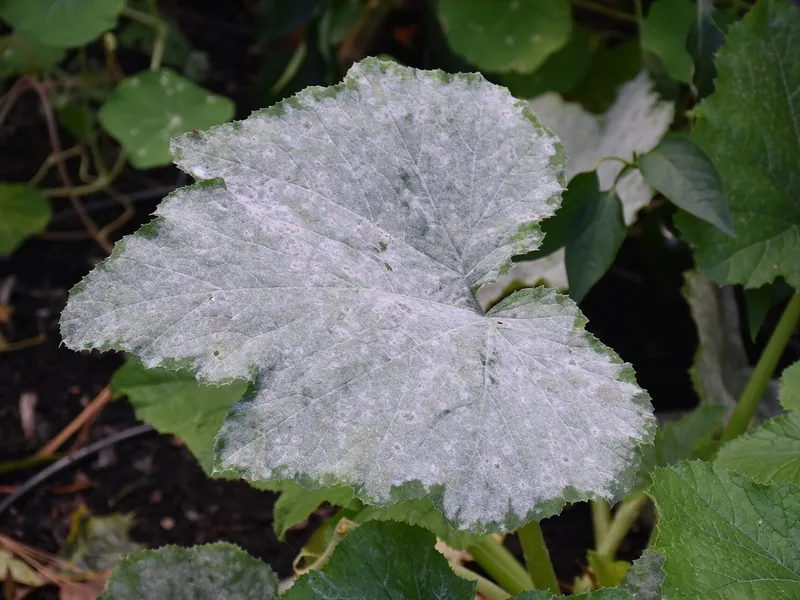
Photo: “Powdery mildew 9” by Dmitry Brant, CC BY-SA 4.0, via Wikimedia Commons (cropped). The cropped version is shared under the same licence.
Powdery mildewDisease
What you'll see: White, powdery patches on the tops of leaves and on stems. Leaves yellow and dry, and fruit may ripen poorly.
Prevent
Grow resistant varieties.
Give plants sun and space for air flow.
Remove badly infected leaves, and clear debris after harvest.
Organic options
Sulfur or potassium bicarbonate, from the first spots. Sulfur can burn some vine crops in heat, and never use it near an oil spray.
Neem oil. Look for OMRI Listed products.
Conventional options
Myclobutanil or propiconazole, if the crop is on the label.
Bee caution: Don't spray open flowers. Spray in the late evening, when bees aren't flying.
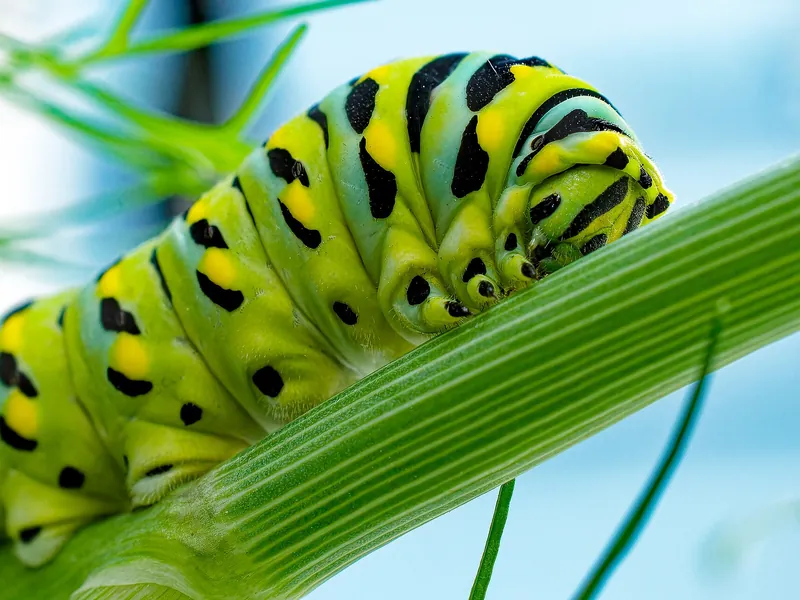
Swallowtail caterpillarsPestSprays are rarely needed
What you'll see: Plump green caterpillars banded in black with yellow dots eat parsley, dill, fennel and parsnip leaves. They grow into black swallowtail butterflies.
Prevent
Plant extra parsley or dill to share.
Check plants in the morning.
Organic options
Hand-pick, or move caterpillars to a spare patch of dill or fennel.
Conventional options
Same as organic.
BoltingGrowing problemNo spray helps
What you'll see: The plant sends up a flower stalk early, and the leaves turn small and bitter. Long days and heat set it off, and in bok choy and other cabbage-family greens so can a late frost or a week of nights below 50 °F.
Prevent
Sow in the cool, shorter days of spring and fall.
Sow small amounts every few weeks rather than all at once.
Choose varieties sold as slow to bolt.
Give afternoon shade in hot spells.
Organic options
Harvest as soon as a stalk starts. Let a few cilantro or dill plants flower for seed and for helpful insects.
Conventional options
None. No spray stops bolting.
Read and follow the product label: it is the law. It sets the rate, the crops it is for, and the days between spraying and picking. Products registered vary by state; for organic growing, look for products allowed under the USDA National Organic Program (OMRI Listed). We name active ingredients, not brands or rates.
The link opens this growing guide, so anyone can read it and look up their own planting dates.
FacebookShare this link on Facebook.XShare this link on X.LinkedInShare this link on LinkedIn.RedditShare this link on Reddit.PinterestShare this link on Pinterest.EmailEmail this link.Open your device's share menu.Copy the link to your clipboard.
Growing more than you can eat? Sell it at a farm stand. TallyTill takes cards and keeps count of what sells, and the Stand plan is free.
 Sow
 Sprout
 True leaves
 Thin or plant out
 Leaf growth
 Harvest