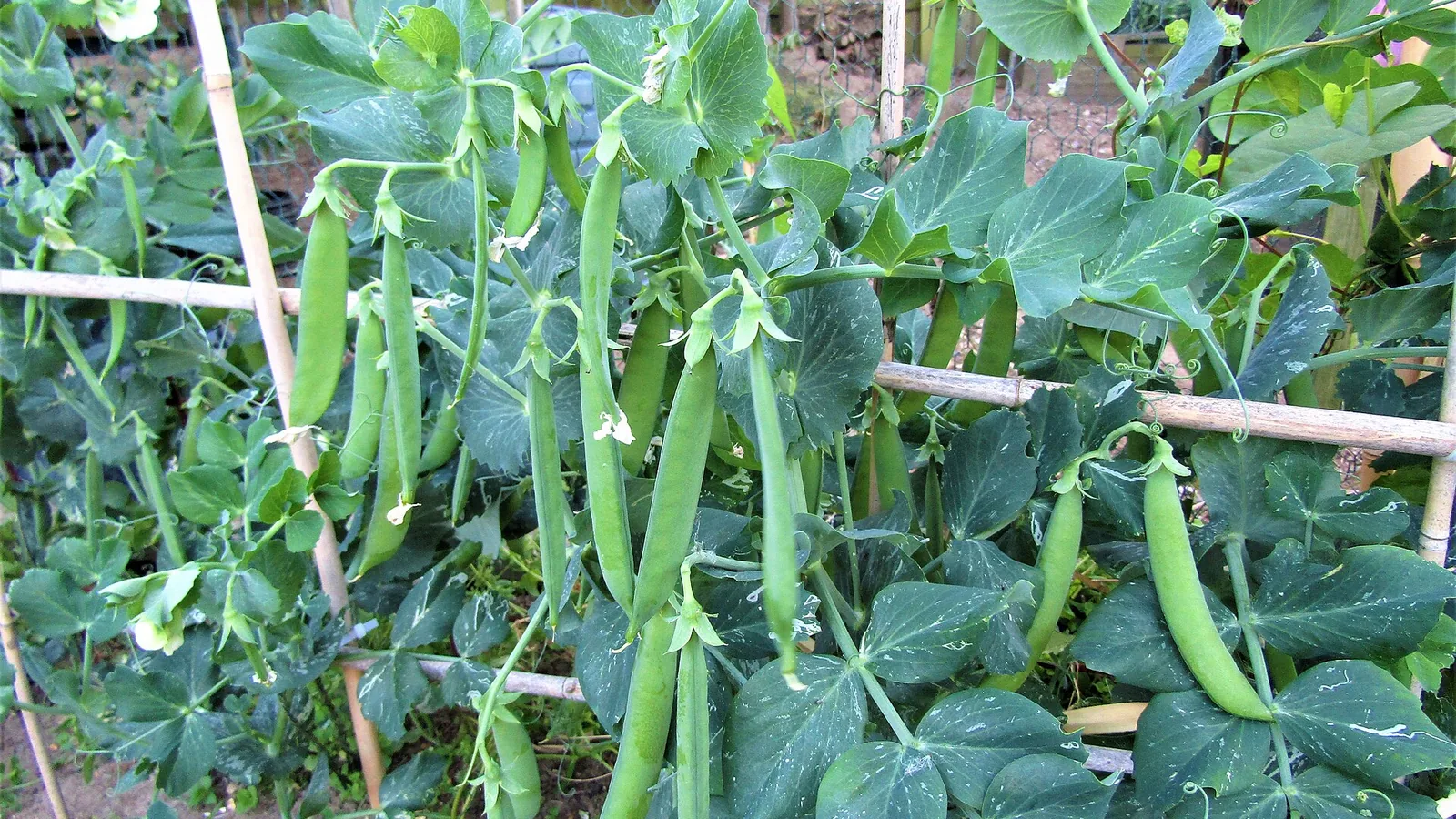
Takes a hard frost. Sow outdoors 2 to 4 weeks before your last frost; sow in fall 8 to 10 weeks before your first fall frost. First harvest 60 to 70 days from sowing.
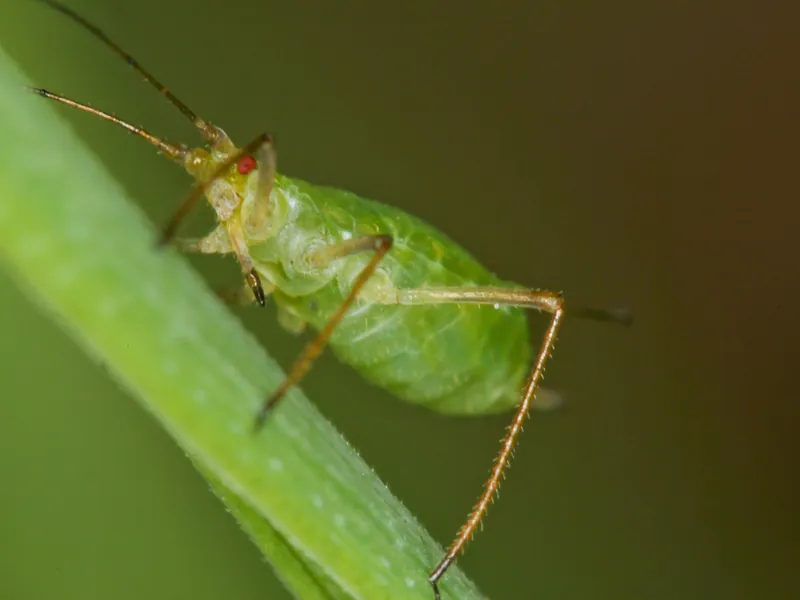
What you'll see: Clusters of large, pale green aphids on pea tips and pods. They can spread viruses that stunt and yellow the plants.
Prevent
Plant peas early, before aphid numbers climb.
Grow virus-resistant varieties where offered.
Use row cover on young plants.
Organic options
Wash aphids off with a strong stream of water.
Insecticidal soap, neem, or OMRI Listed pyrethrins (without piperonyl butoxide).
Conventional options
Same as organic.
Bee caution: Don't spray open flowers. Spray in the late evening, when bees aren't flying.
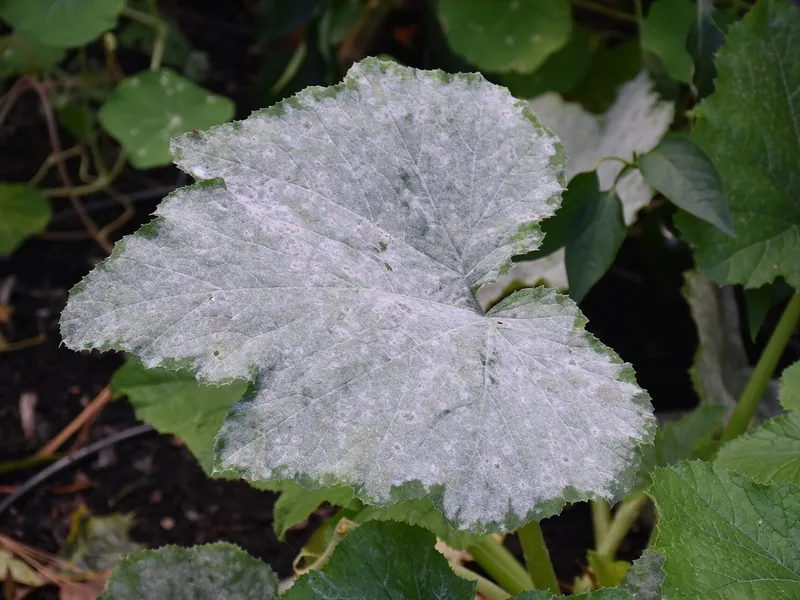
Photo: “Powdery mildew 9” by Dmitry Brant, CC BY-SA 4.0, via Wikimedia Commons (cropped). The cropped version is shared under the same licence.
Powdery mildewDisease
What you'll see: White, powdery patches on the tops of leaves and on stems. Leaves yellow and dry, and fruit may ripen poorly.
Prevent
Grow resistant varieties.
Give plants sun and space for air flow.
Remove badly infected leaves, and clear debris after harvest.
Organic options
Sulfur or potassium bicarbonate, from the first spots. Sulfur can burn some vine crops in heat, and never use it near an oil spray.
Neem oil. Look for OMRI Listed products.
Conventional options
Myclobutanil or propiconazole, if the crop is on the label.
Bee caution: Don't spray open flowers. Spray in the late evening, when bees aren't flying.
Root rotDiseaseNo spray helps
What you'll see: Plants yellow, wilt and die back even though the soil is wet. Roots are brown, soft and few, and bean seedlings may rot at the soil line.
Prevent
Plant in well-drained soil; grow raspberries on beds raised about a foot.
Do not overwater.
Plant beans and peas in a new spot each year, and sow them only once the soil has warmed.
Start with healthy plants, and do not move soil from a sick bed to a healthy one.
Organic options
Remove and dispose of dying plants and clear crop debris after harvest.
Conventional options
None. Fungicides have not proven effective in home gardens; drainage is the fix.
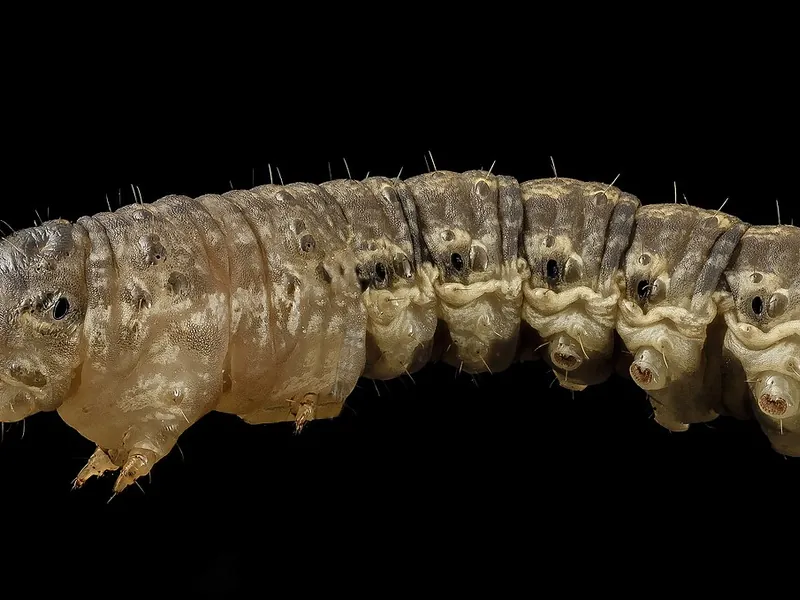
What you'll see: Young plants are cut off at or just above the soil overnight. Fat gray or brown caterpillars curl into a C shape in the soil nearby.
Prevent
Put a cardboard or foil collar around each transplant, pushed a few inches into the soil.
Till the bed before planting, and pull weeds.
Keep a strip of bare, dry soil along the garden edge.
Organic options
Dig gently around cut plants and destroy the caterpillars.
Conventional options
Usually not needed in a home garden. Collars work better than sprays.
Fusarium wiltDiseaseNo spray helps
What you'll see: Lower leaves yellow, often on one side of the plant, and the plant wilts and dies. A cut stem shows brown streaks inside.
Prevent
Grow resistant varieties; on tomatoes look for F on the label.
Buy healthy transplants and clean seed.
Rotate for several years; the fungus lives a long time in soil.
Keep soil pH near neutral and avoid too much nitrogen.
Organic options
Pull and remove infected plants.
Conventional options
None. No spray controls fusarium wilt.
Read and follow the product label: it is the law. It sets the rate, the crops it is for, and the days between spraying and picking. Products registered vary by state; for organic growing, look for products allowed under the USDA National Organic Program (OMRI Listed). We name active ingredients, not brands or rates.
The link opens this growing guide, so anyone can read it and look up their own planting dates.
FacebookShare this link on Facebook.XShare this link on X.LinkedInShare this link on LinkedIn.RedditShare this link on Reddit.PinterestShare this link on Pinterest.EmailEmail this link.Open your device's share menu.Copy the link to your clipboard.
Growing more than you can eat? Sell it at a farm stand. TallyTill takes cards and keeps count of what sells, and the Stand plan is free.
 Sow
 Sprout
 Vines
 Flowers
 Pods
 Harvest