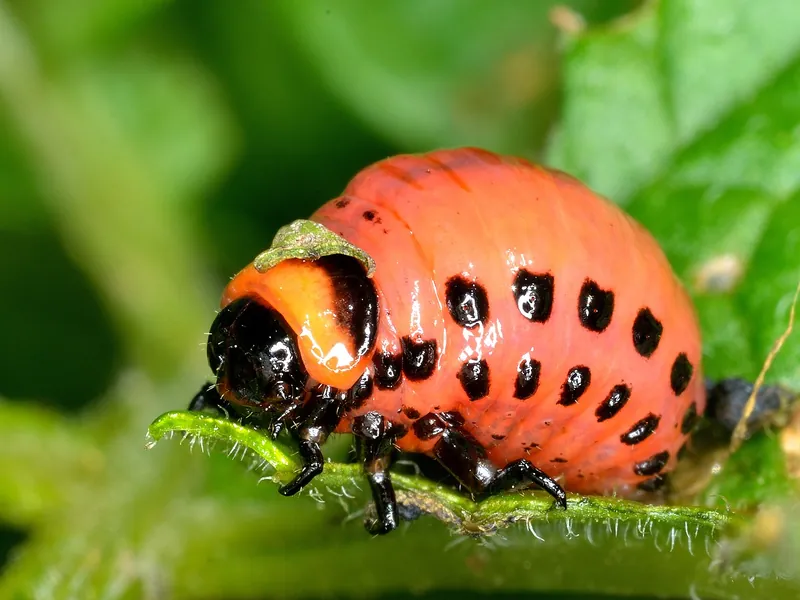
What you'll see: Yellow-and-black striped beetles and humped red-orange larvae strip potato and eggplant leaves. Orange egg clusters sit under the leaves.
Prevent
Plant potatoes and eggplant as far from last year's spot as you can.
Check under leaves and crush egg clusters.
Organic options
Hand-pick beetles and larvae into soapy water.
Spinosad, Bt (Bacillus thuringiensis tenebrionis) or neem on young larvae. Look for OMRI Listed products.
Conventional options
Permethrin or esfenvalerate, if the crop is on the label. Beetles resist many garden insecticides, so switch types if one fails.
Bee caution: Don't spray open flowers. Spray in the late evening, when bees aren't flying.
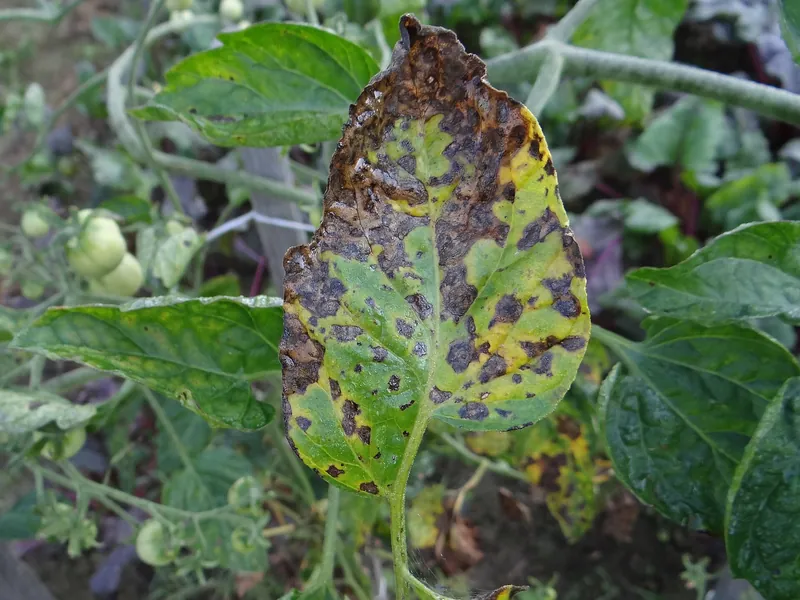
What you'll see: Brown spots with rings like a target and a yellow edge show on the lowest leaves first. Leaves yellow and drop from the bottom up.
Prevent
Rotate: no tomatoes, tomatillos, potatoes, peppers or eggplant in that bed for 2 years or more.
Mulch so soil does not splash onto leaves.
Stake and space plants, and water at the base.
Grow resistant varieties.
Organic options
Pick off spotted leaves early, never more than a third of the plant, and bin them.
Copper fungicide, from the first spots. Look for OMRI Listed products.
Conventional options
Chlorothalonil or mancozeb, from the first spots, if the crop is on the label; tomato labels do not cover tomatillos. Most home plants still yield well.
Bee caution: Don't spray open flowers. Spray in the late evening, when bees aren't flying.
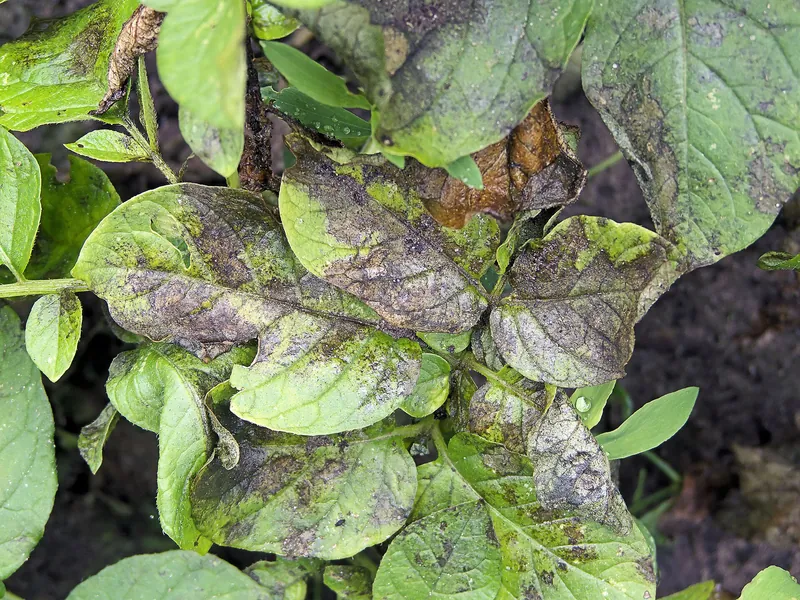
What you'll see: Large, dark, greasy-looking blotches on leaves and stems spread fast in cool, wet weather, with white mold beneath. Fruit and tubers rot.
Prevent
Do not plant where tomatoes, tomatillos, potatoes, peppers or eggplant grew in the last 3 to 4 years.
Plant certified seed potatoes and pull volunteer potatoes.
Keep leaves dry: water at the base in the morning and space plants.
Grow resistant varieties.
Organic options
Pull and bag infected plants at once; do not compost them.
Copper fungicide, before infection, when late blight is reported nearby. Look for OMRI Listed products.
Conventional options
Chlorothalonil or mancozeb, before infection, if the crop is on the label; tomato labels do not cover tomatillos. Sprays protect leaves; they do not cure.
Bee caution: Don't spray open flowers. Spray in the late evening, when bees aren't flying.
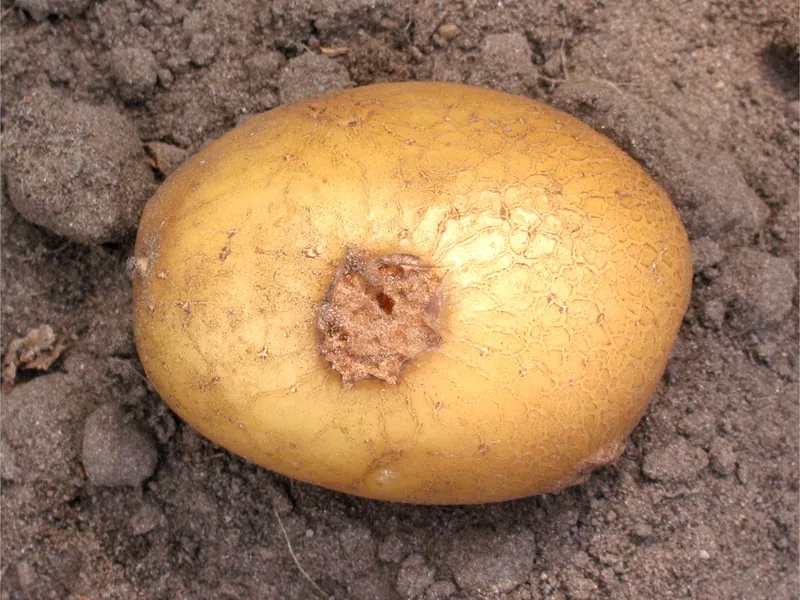
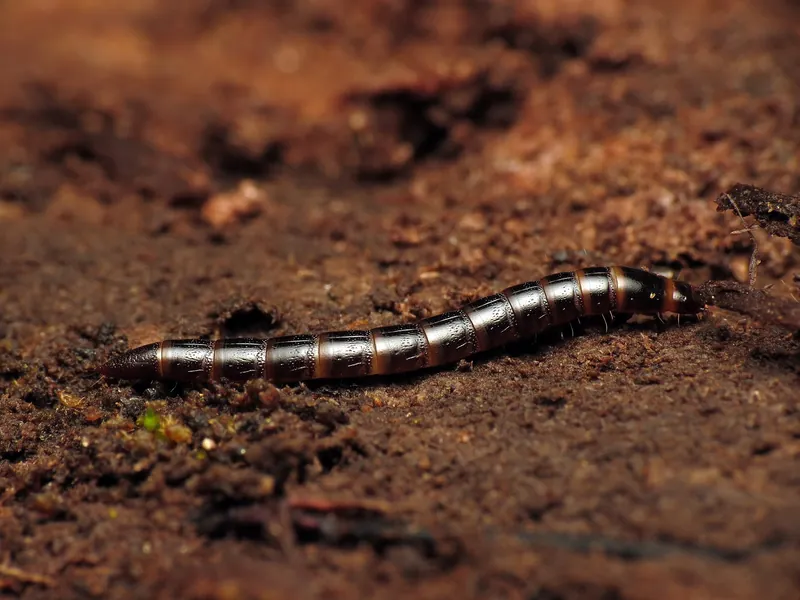
What you'll see: Thin, shiny, yellow-brown larvae bore narrow holes into potatoes, roots and seeds. Seedlings may wilt.
Prevent
Expect them in beds newly made from lawn or sod.
Bury chunks of potato as bait, dig them up after about a week, and destroy the larvae.
Rotate crops.
Organic options
Bait with potato or carrot pieces, and check and destroy the catch often.
Conventional options
Insecticides worked into the soil before planting are an option only where wireworms have been a serious problem; most are farm products.
Hollow heartGrowing problemNo spray helps
What you'll see: A hollow, star- or lens-shaped hole in the center of large tubers, sometimes lined in brown.
Prevent
Keep soil moisture even, so tuber growth does not stall and then surge.
Avoid very wide spacing, which makes oversized, fast-growing tubers.
Do not overfeed with nitrogen early in the season.
Organic options
Even watering is the fix. Cut out the hollow.
Conventional options
None. No spray prevents it.
Read and follow the product label: it is the law. It sets the rate, the crops it is for, and the days between spraying and picking. Products registered vary by state; for organic growing, look for products allowed under the USDA National Organic Program (OMRI Listed). We name active ingredients, not brands or rates.
The link opens this growing guide, so anyone can read it and look up their own planting dates.
FacebookShare this link on Facebook.XShare this link on X.LinkedInShare this link on LinkedIn.RedditShare this link on Reddit.PinterestShare this link on Pinterest.EmailEmail this link.Open your device's share menu.Copy the link to your clipboard.
Growing more than you can eat? Sell it at a farm stand. TallyTill takes cards and keeps count of what sells, and the Stand plan is free.
 Plant
 Sprout
 Leaf growth
 Flowers
 Tubers bulk
 Harvest