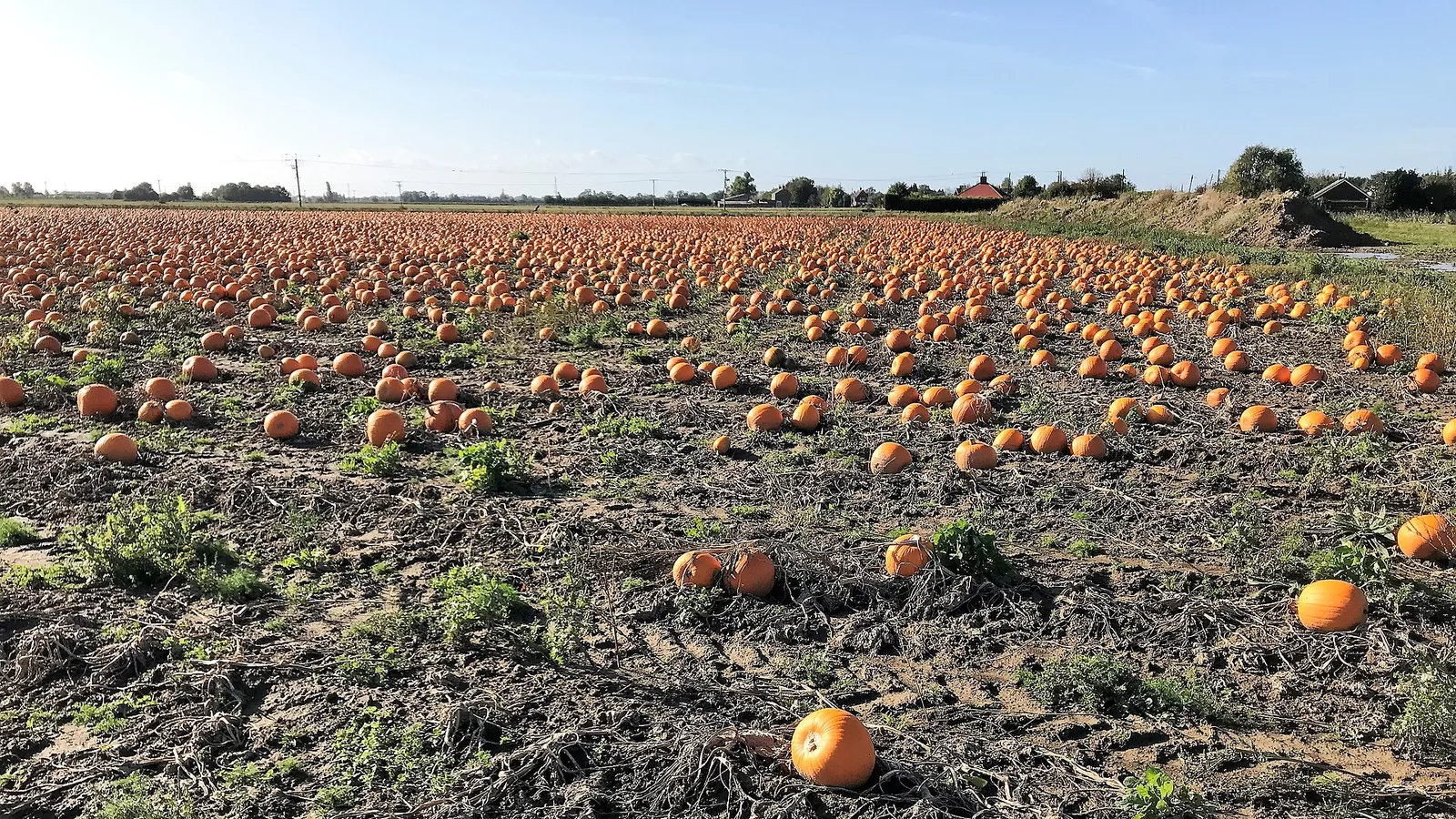
Warm-season and frost-tender. Start indoors 1 to 2 weeks before your last frost; plant out 2 to 3 weeks after your last frost; sow outdoors 2 to 4 weeks after your last frost. First harvest 90 to 120 days from sowing.
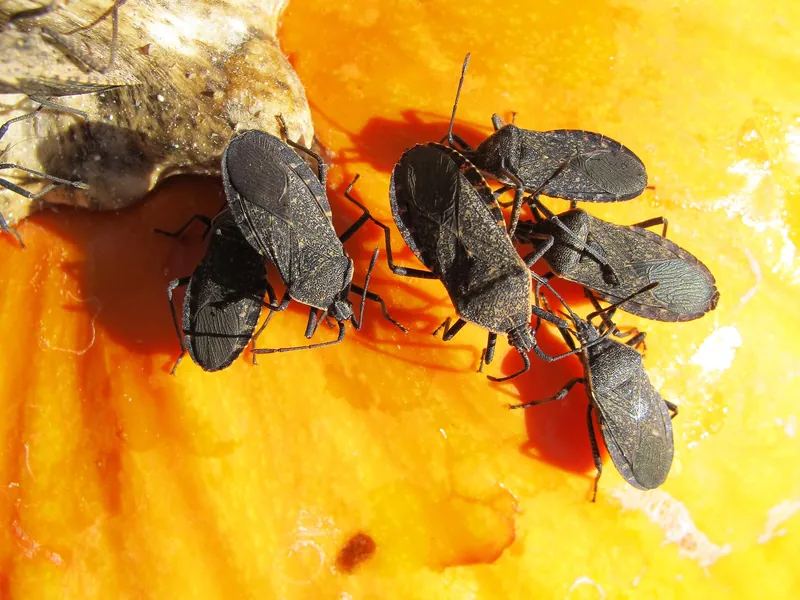
What you'll see: Flat gray-brown bugs and gray nymphs suck sap, leaving yellow spots that turn brown, and vines wilt. Bronze egg clusters sit under the leaves.
Prevent
Check leaf undersides each week from early summer and crush egg clusters.
Lay a board by the plants at night and destroy the bugs under it each morning.
Clear plant debris and mulch in fall.
Organic options
Hand-pick bugs and scrape off eggs.
OMRI Listed pyrethrins (without piperonyl butoxide) with diatomaceous earth around the base of the plants.
Conventional options
Esfenvalerate, permethrin or carbaryl, aimed at young nymphs soon after eggs hatch.
Bee caution: Don't spray open flowers. Spray in the late evening, when bees aren't flying.
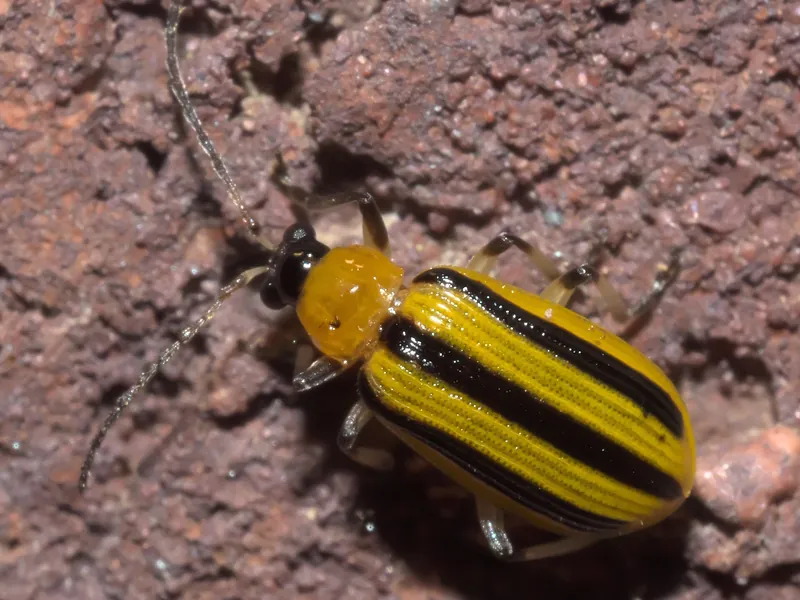
What you'll see: Yellow beetles with black stripes or spots chew seedlings, leaves and flowers. They spread bacterial wilt, which kills cucumbers and melons.
Prevent
Cover seedlings with row cover and seal the edges; remove it at flowering so bees can reach the blooms.
Clear weeds and plant debris where adults spend the winter.
Mulch with straw around established plants.
Organic options
Knock beetles into soapy water on small plantings.
Kaolin clay on the leaves deters feeding but does not kill beetles; apply it before damage builds.
Conventional options
Several garden insecticides are labeled for cucumber beetles; check the crop is listed. Spray early or late in the day to spare bees.
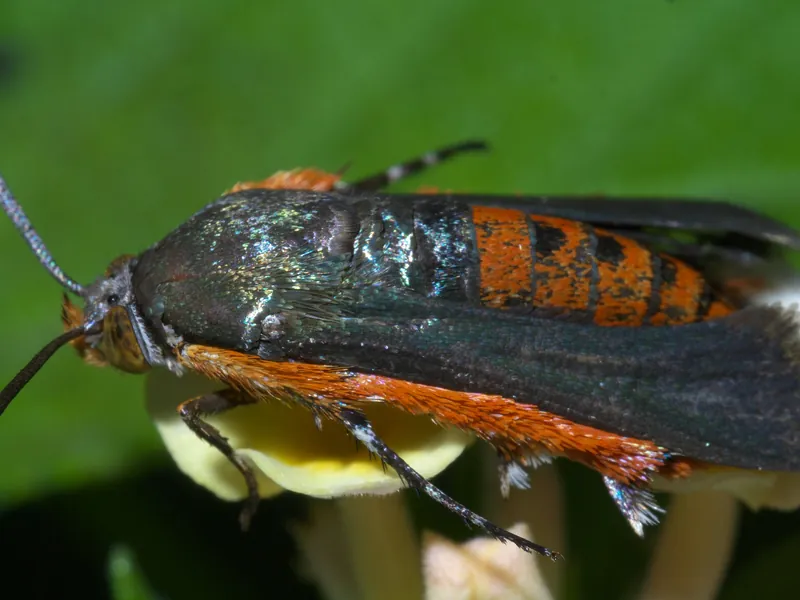
What you'll see: A vine wilts suddenly, and a hole near the base leaks orange, sawdust-like frass. A fat white larva is inside the stem.
Prevent
Cover vines with row cover when they start to run, and remove it at flowering.
Do not use row cover where squash grew last year; borers spend the winter in that soil.
Grow butternut squash, which is hit less often.
Pull and destroy vines killed by borers.
Organic options
Slit the stem lengthwise above the frass, remove the larva, and cover the cut with moist soil.
Bt sprays do not reach larvae inside the stem.
Conventional options
Carbaryl, permethrin, bifenthrin or esfenvalerate on the stem bases, starting when adults first appear.
Bee caution: Don't spray open flowers. Spray in the late evening, when bees aren't flying.
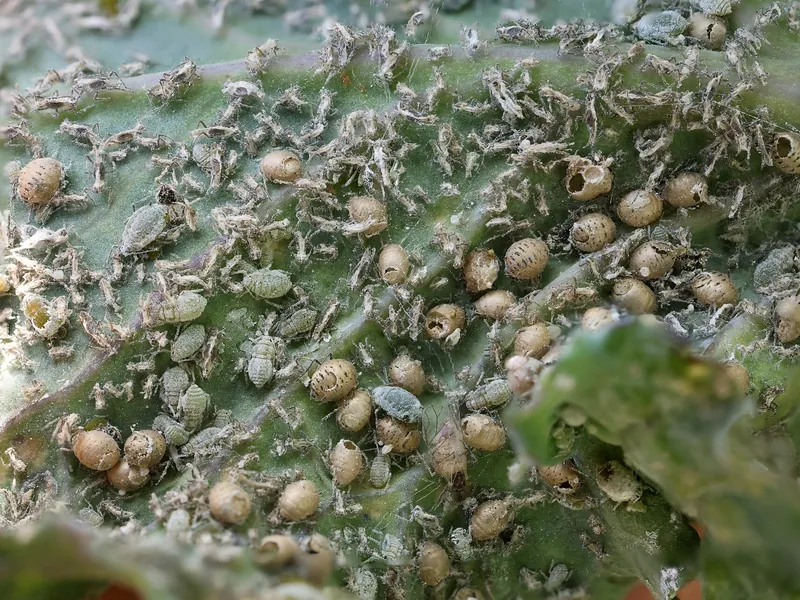
Photo: “Aphids on Kale leaf” by Sanjay Acharya, CC BY-SA 4.0, via Wikimedia Commons (cropped). The cropped version is shared under the same licence.
AphidsPest
What you'll see: Clusters of small, soft-bodied green, black or gray insects on new shoots and under leaves. Leaves curl, and a sticky film may coat them.
Prevent
Check leaf undersides each week; a few aphids do little harm.
Pull nearby weeds, such as wild mustards, that feed aphids.
Grow flowers for lady beetles, lacewings and hover flies, and avoid broad sprays that kill them.
Organic options
Knock aphids off with a strong spray of water.
Insecticidal soap or horticultural oil on leaf undersides, repeated as the label allows.
Neem oil, or OMRI Listed pyrethrins (without piperonyl butoxide).
Conventional options
Malathion or permethrin, if the crop is on the label. These also kill the insects that eat aphids.
Bee caution: Don't spray open flowers. Spray in the late evening, when bees aren't flying.
Read and follow the product label: it is the law. It sets the rate, the crops it is for, and the days between spraying and picking. Products registered vary by state; for organic growing, look for products allowed under the USDA National Organic Program (OMRI Listed). We name active ingredients, not brands or rates.
The link opens this growing guide, so anyone can read it and look up their own planting dates.
FacebookShare this link on Facebook.XShare this link on X.LinkedInShare this link on LinkedIn.RedditShare this link on Reddit.PinterestShare this link on Pinterest.EmailEmail this link.Open your device's share menu.Copy the link to your clipboard.
Growing more than you can eat? Sell it at a farm stand. TallyTill takes cards and keeps count of what sells, and the Stand plan is free.
 Sow
 Sprout
 Vines
 Flowers
 Fruit sets
 Harvest