Put in your ZIP code to see when to start, plant and harvest strawberries where you live, from your own frost dates.
Open my planting calendarOpen the planting calendarAdd this crop to the calendar saved on this device
From seed to harvest
PlantSet in the groundWeek 0
EstablishRoots take holdWeek 1–4
DormantRests over winterWeek 26–32
FlowersFlowers openWeek 54–57
Fruit setsSmall fruit formsWeek 56–59
HarvestReady to pickWeek 58–63
How to plant and grow
Pick a sunny site
Choose well-drained soil in full sun. Avoid ground that recently grew tomatoes, potatoes, peppers, eggplant, raspberries or strawberries, since they share soil diseases.
Plant dormant crowns
Set dormant plants in early spring as soon as the soil can be worked. Spread the roots straight down and bury them to the middle of the crown, not deeper.
Space for runners
For June-bearers, set plants 18 to 24 inches apart in rows about 4 feet apart and let runners fill a matted row about 2 feet wide.
Pinch first-year flowers
Remove all blossoms on June-bearers the first season so plants build roots and runners. Day-neutral types can fruit later in the first summer after early blossoms are removed.
Water and weed
Give about an inch of water a week. Weed shallowly, since the roots are near the surface, or use mulch to hold weeds down.
Mulch for winter
Cover rows with about 2 inches of straw once nights near 20 °F. Pull it back in spring when new leaves start, leaving some between rows.
Pick ripe berries
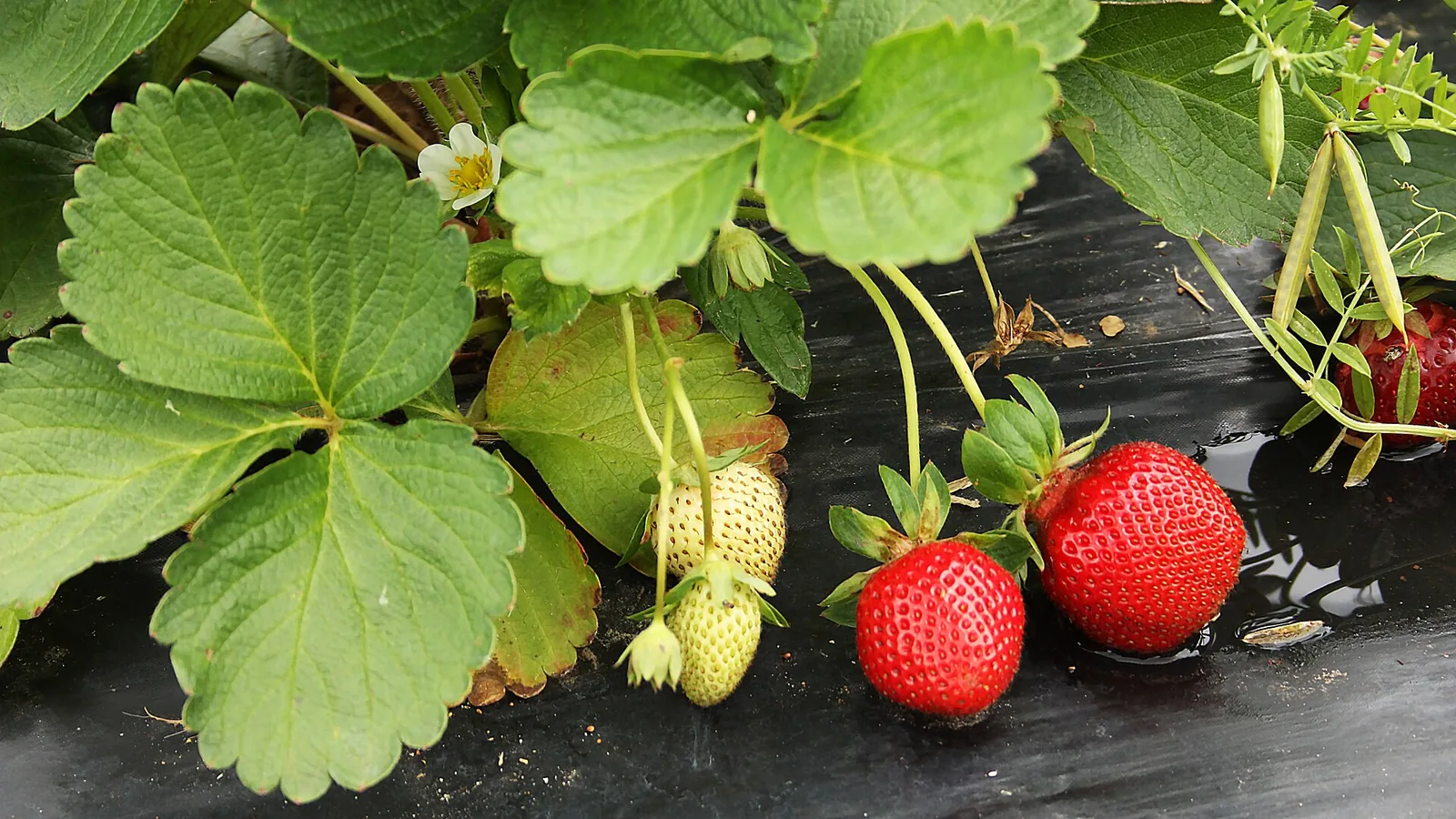
June-bearers ripen over about three weeks in early summer of the second year. Pick fully red berries every day or two, and remove rotten fruit.
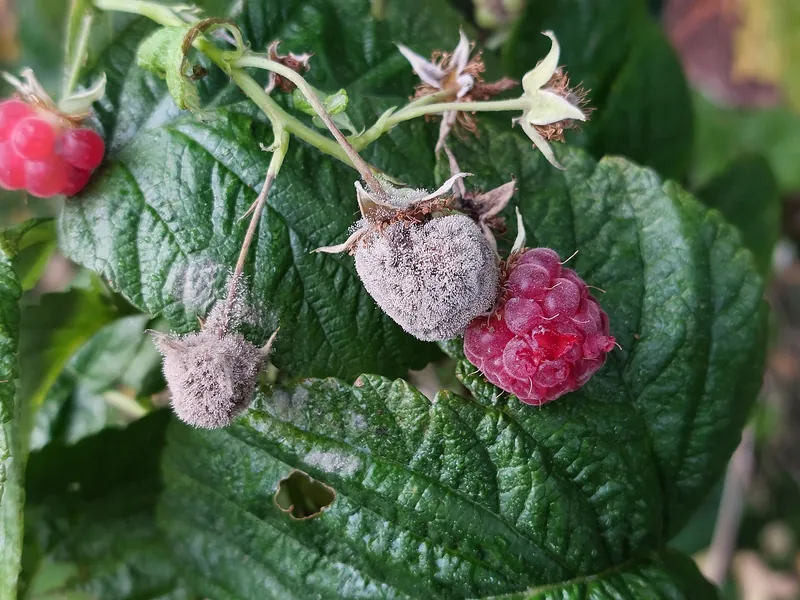
What you'll see: Soft brown rot covered in fuzzy gray mold on fruit, flowers or leaves, or small sunken brown or gray spots near the base of shallot bulbs. It is worst in cool, wet weather.
Prevent
Mulch strawberries with straw so fruit does not touch damp soil.
Space plants for air flow and water at the base in the morning.
Go easy on nitrogen in spring.
Pick ripe fruit often and remove rotting fruit and dead flowers.
Organic options
Remove moldy fruit and plant parts. Organic sprays have little proof of working, so rely on the steps above.
Conventional options
Same as organic. In home gardens the steps above work best; fungicides are mainly for commercial growers.
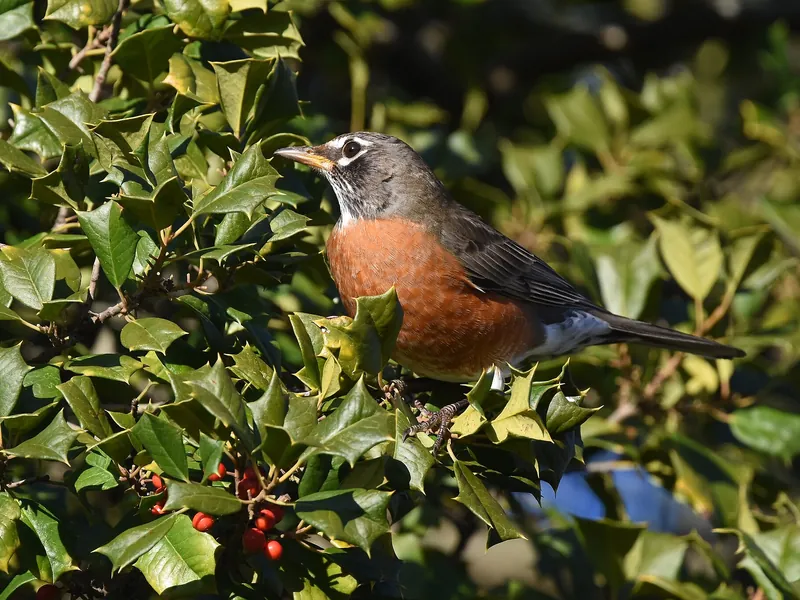
What you'll see: Ripe berries are pecked or gone, and sunflower heads are stripped of seed.
Prevent
Put netting over plants before fruit colors, on a frame if you can, and close every gap.
Scare devices work only for a short time; move them often and pair them with netting.
Organic options
Netting is the method that works; scare tape and balloons help only briefly.
Conventional options
Same as organic: netting. No spray is recommended for a home garden.
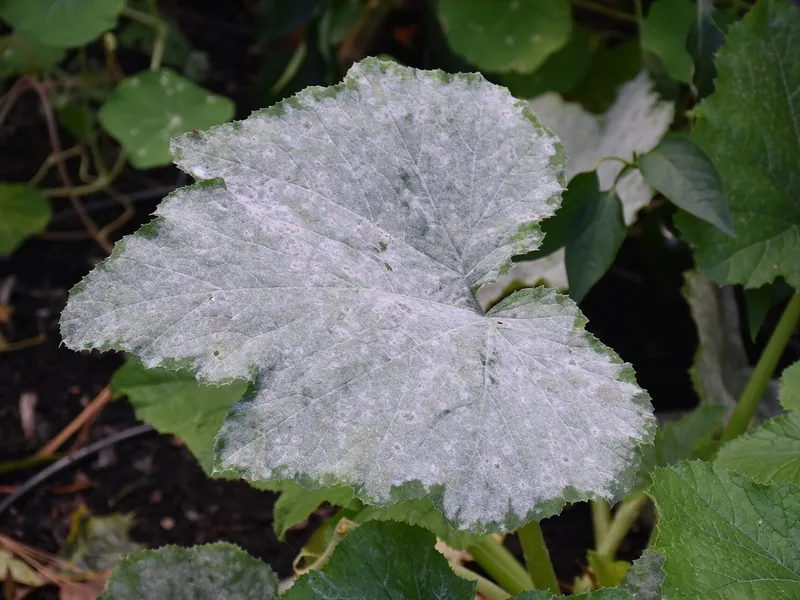
Photo: “Powdery mildew 9” by Dmitry Brant, CC BY-SA 4.0, via Wikimedia Commons (cropped). The cropped version is shared under the same licence.
Powdery mildewDisease
What you'll see: White, powdery patches on the tops of leaves and on stems. Leaves yellow and dry, and fruit may ripen poorly.
Prevent
Grow resistant varieties.
Give plants sun and space for air flow.
Remove badly infected leaves, and clear debris after harvest.
Organic options
Sulfur or potassium bicarbonate, from the first spots. Sulfur can burn some vine crops in heat, and never use it near an oil spray.
Neem oil. Look for OMRI Listed products.
Conventional options
Myclobutanil or propiconazole, if the crop is on the label.
Bee caution: Don't spray open flowers. Spray in the late evening, when bees aren't flying.
Read and follow the product label: it is the law. It sets the rate, the crops it is for, and the days between spraying and picking. Products registered vary by state; for organic growing, look for products allowed under the USDA National Organic Program (OMRI Listed). We name active ingredients, not brands or rates.
The link opens this growing guide, so anyone can read it and look up their own planting dates.
FacebookShare this link on Facebook.XShare this link on X.LinkedInShare this link on LinkedIn.RedditShare this link on Reddit.PinterestShare this link on Pinterest.EmailEmail this link.Open your device's share menu.Copy the link to your clipboard.
Growing more than you can eat? Sell it at a farm stand. TallyTill takes cards and keeps count of what sells, and the Stand plan is free.
 Plant
 Establish
 Dormant
 Flowers
 Fruit sets
 Harvest