Takes a hard frost. A perennial for zones 5 to 9. Start indoors 6 to 8 weeks before your last frost; plant out up to 2 weeks after your last frost; sow outdoors up to 2 weeks after your last frost. First harvest 56 to 90 days from planting.
Put in your ZIP code to see when to start, plant and harvest thyme where you live, from your own frost dates.
Open my planting calendarOpen the planting calendarAdd this crop to the calendar saved on this device
From seed to harvest
SowSeed goes inWeek 0
SproutFirst shoots showWeek 2–3
True leavesFirst real leavesWeek 4–6
Thin or plant outGive each plant roomWeek 6–10
Leaf growthLeaves fill outWeek 8–12
HarvestReady to pickWeek 14–22
How to plant and grow
Start seed indoors
Sow seed 6 to 8 weeks before your last frost. It sprouts slowly and unevenly, so many growers start from cuttings, layered stems or divisions instead.
Plant after frost
Set plants out once frost danger has passed, 8 to 24 inches apart by variety, in full sun and light, well-drained soil.
Keep it lean and dry
Water only in long dry spells and never overwater. Rich soil and extra fertilizer cut the flavor and shorten the plant's life.
Harvest at first bloom
Cut leafy stems just before or as the first flowers open, when the oils peak. You can snip sprigs as needed through the season.
Shear and renew
Shear lightly after flowering. Thyme turns woody with age, so divide or replace plants every few years.
Mind winter drainage
Soggy soil, above all in winter, shortens its life. Plant where water drains away fast, such as a raised bed.
Common problems
Root rotDiseaseNo spray helps
What you'll see: Plants yellow, wilt and die back even though the soil is wet. Roots are brown, soft and few, and bean seedlings may rot at the soil line.
Prevent
Plant in well-drained soil; grow raspberries on beds raised about a foot.
Do not overwater.
Plant beans and peas in a new spot each year, and sow them only once the soil has warmed.
Start with healthy plants, and do not move soil from a sick bed to a healthy one.
Organic options
Remove and dispose of dying plants and clear crop debris after harvest.
Conventional options
None. Fungicides have not proven effective in home gardens; drainage is the fix.
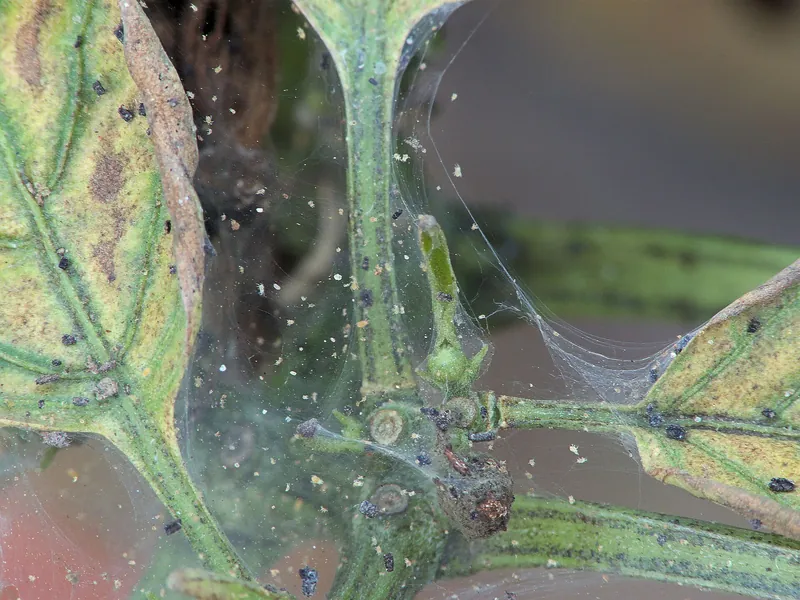
Avoid broad insecticides; they kill mite predators and can start an outbreak.
Organic options
Hose leaf undersides hard, often.
Insecticidal soap or horticultural oil on leaf undersides, repeated as the label allows.
Release predatory mites once pest mites are present.
Conventional options
Same as organic. Broad insecticides often make mites worse.
Bee caution: Don't spray open flowers. Spray in the late evening, when bees aren't flying.
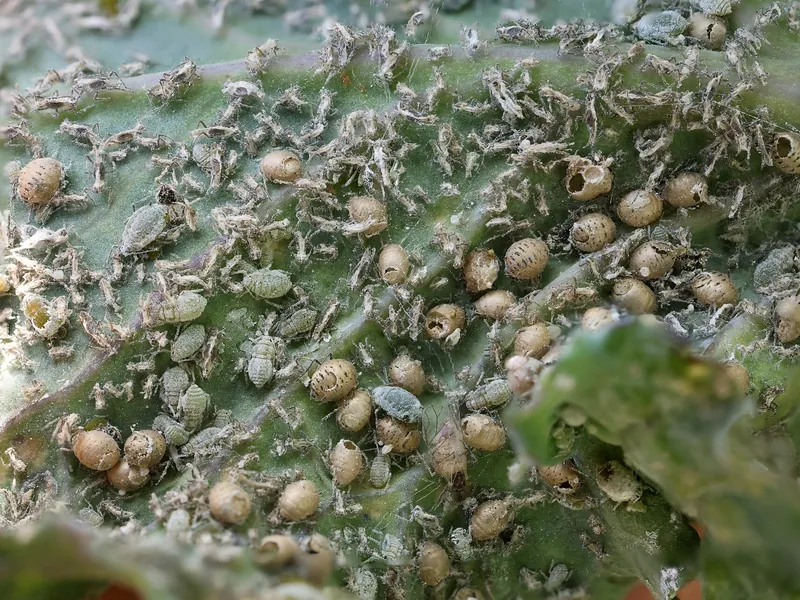
Photo: “Aphids on Kale leaf” by Sanjay Acharya, CC BY-SA 4.0, via Wikimedia Commons (cropped). The cropped version is shared under the same licence.
AphidsPest
What you'll see: Clusters of small, soft-bodied green, black or gray insects on new shoots and under leaves. Leaves curl, and a sticky film may coat them.
Prevent
Check leaf undersides each week; a few aphids do little harm.
Pull nearby weeds, such as wild mustards, that feed aphids.
Grow flowers for lady beetles, lacewings and hover flies, and avoid broad sprays that kill them.
Organic options
Knock aphids off with a strong spray of water.
Insecticidal soap or horticultural oil on leaf undersides, repeated as the label allows.
Neem oil, or OMRI Listed pyrethrins (without piperonyl butoxide).
Conventional options
Malathion or permethrin, if the crop is on the label. These also kill the insects that eat aphids.
Bee caution: Don't spray open flowers. Spray in the late evening, when bees aren't flying.
Read and follow the product label: it is the law. It sets the rate, the crops it is for, and the days between spraying and picking. Products registered vary by state; for organic growing, look for products allowed under the USDA National Organic Program (OMRI Listed). We name active ingredients, not brands or rates.
The link opens this growing guide, so anyone can read it and look up their own planting dates.
FacebookShare this link on Facebook.XShare this link on X.LinkedInShare this link on LinkedIn.RedditShare this link on Reddit.PinterestShare this link on Pinterest.EmailEmail this link.Open your device's share menu.Copy the link to your clipboard.
Growing more than you can eat? Sell it at a farm stand. TallyTill takes cards and keeps count of what sells, and the Stand plan is free.
 Sow
 Sprout
 True leaves
 Thin or plant out
 Leaf growth
 Harvest